Bering Strait tunnel: pipe dream or game-changer for US-Russia-China ties?
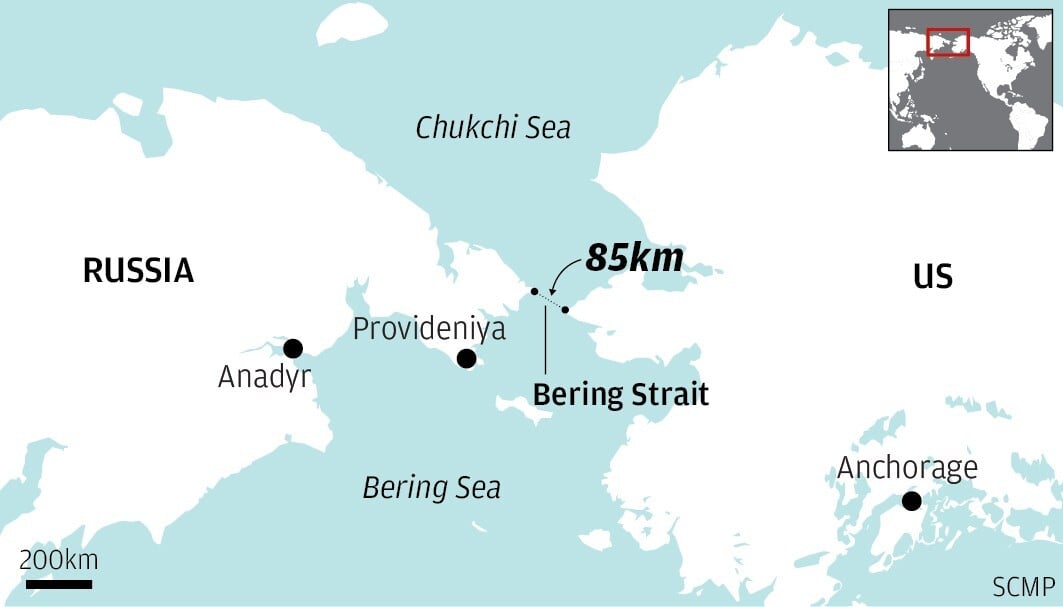
- Now that a US-Canada rail line has been approved, there are fresh hopes that a link can finally be built across the icy 85km strait
- Detractors point to its huge potential cost, but backers see potential for a global shipping nexus and a new era of international cooperation

More recently, in the 1960s, Chinese-American structural engineer Tung Yen Lin drew up detailed plans for an “Intercontinental Peace Bridge” across the Bering Strait, which he envisioned as a symbol of international cooperation as well as an important trade route.
The Trump-approved Alaska to Alberta, or A2A, rail project is being hailed as an important link in the chain across the apex of the Pacific Rim, one that could eventually spawn a vast transport network connecting Asia directly with the Americas, through the strait.
Fyodor Soloview, founder of Anchorage-based InterBering, a private company dedicated to lobbying for the link, said there was a “significant body of interest, both Russian and American, in building a Bering Strait link”, before adding that he thought the “the main beneficiary would be China – the main global shipper of products – and its vast railway network”.
“The project’s a long way from breaking ground, but the announcement about A2A is a great step forward,” Soloview said.