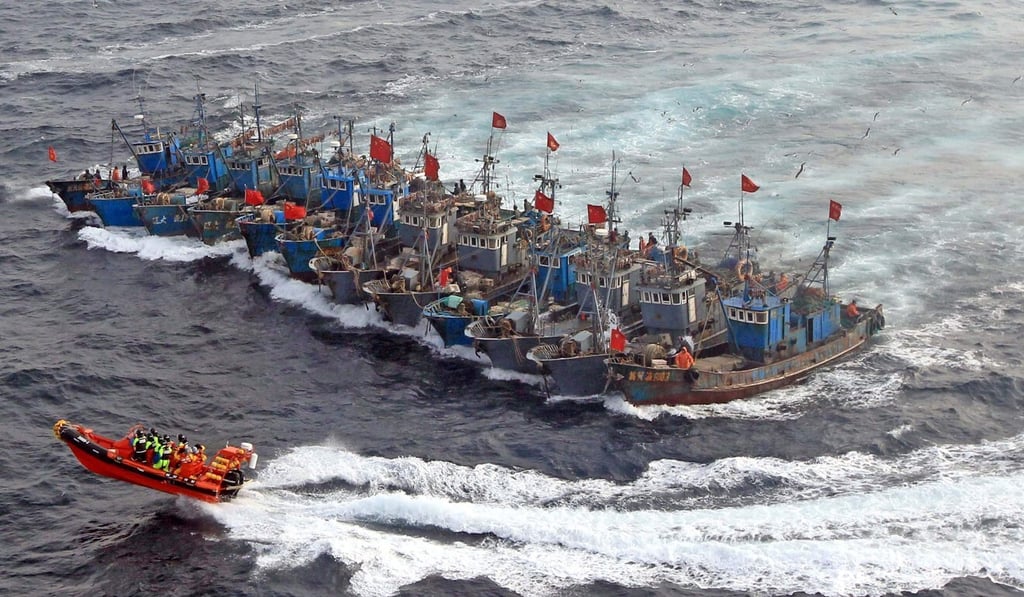
The US wants to take on China over illegal fishing in the South China Sea. Why is Asean wary?
- Analysts say countries in the region welcome the move, but do not want militarised law enforcement that could spark bigger clashes in the disputed waterway
- China is the top perpetrator of illegal fishing, a sector the UN estimates is worth US$23.5 billion globally

Their comments are a response to United States National Security Adviser Robert O’Brien’s announcement last month that the US Coast Guard would deploy its newest fast-response cutters in the Indo-Pacific to police illegal fishing by China.
Earlier this week, David Feith, deputy assistant secretary for regional and security policy and multilateral affairs at the US Bureau of East Asian and Pacific Affairs, told journalists Washington would expand the number of “shiprider” agreements the US Coast Guard has with Pacific countries to help them counter China’s “aggressive behaviour” on the high seas and in sovereign waters of other nations.
Under a shiprider agreement, one country’s authorities are allowed to board law enforcement vessels or aircraft of another nation while they are on patrol, during which the former can authorise the latter to take law enforcement action on their behalf.
“In some areas, such as the Northern Pacific, stateless fishing vessels display characteristics of Chinese registration. In addition, China’s maritime militia – estimated to include more than 3,000 vessels – actively carries out aggressive behaviour on the high seas and in sovereign waters of other nations to coerce and intimidate legitimate fishers in support of the Chinese Communist Party’s long-term maritime strategic goals,” Feith said.