Filipinos fear Omicron will ‘paralyse’ nation as government’s focus turns to election
- Just under half the country has been double-vaccinated, while the Duterte administration has ruled out another punishing lockdown ahead of polls in May
- Cases hit a record on the weekend with the health ministry confirming the community transmission of Omicron around Manila
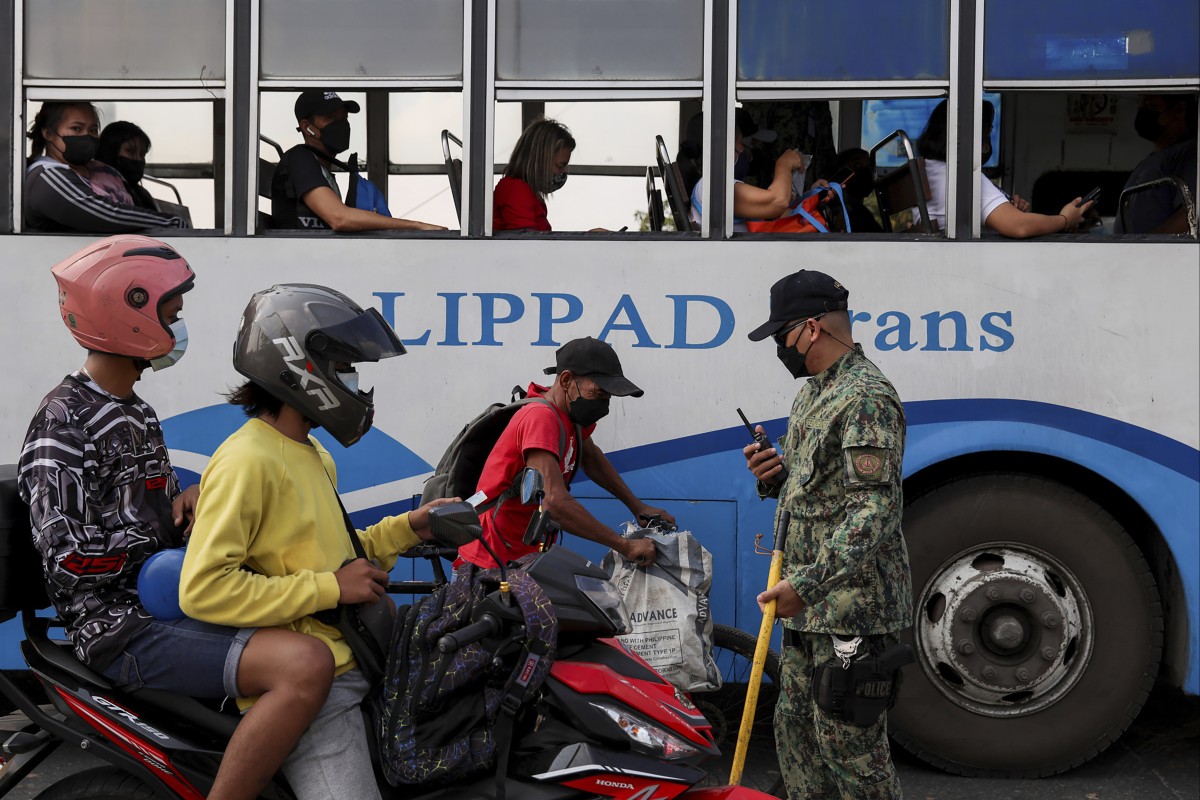
On the morning of January 7, a sound truck cruised the streets of one middle-class district in Manila’s Quezon City to alert residents of the rising number of Covid-19 cases and where they could get vaccinated.
The announcer concluded by saying, “Patnubayan tayo ng Panginoon” – may God guide us.
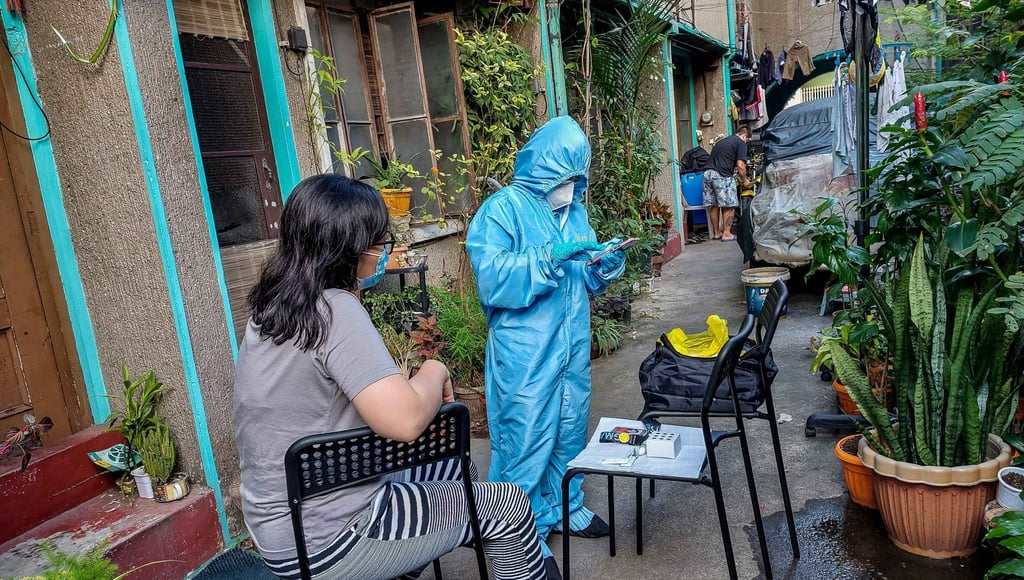
Infections have been doubling every week since the end of last year. According to the Philippine health department, 2,961 new cases were recorded on December 31. On January 12, the figure was 32,000. Plotted on a graph, the growth represents an almost vertical line. Active cases hit a record of 280,813 on Saturday.
Dr Anthony Leachon, a former senior adviser to the Philippines’ Covid-19 task force, said the growth was due to “the arrival of Omicron”, as well as the Christmas rush and citizens’ violations of health protocols.
The variant “could only have come from another country”, he added.
Omicron could not have arrived at a worse time for the Philippines. Because of government delays in securing vaccines and syringes, and incompetence by officials in distributing them, the country had vaccinated only 53 million people, or just under half of its 110 million people, as of January 11.