-
Advertisement
Asia Tech
This Week in AsiaEconomics

Japan starts subsidy scheme to revive domestic chipmaking, with US$3.46 billion going to TSMC and Sony

  • Japanese government providing US$3.4 billion subsidy for construction of a TMSC/Sony plant that would produce thousands of semiconductors monthly
  • Programme was introduced after global chip shortage affected numerous Japanese sectors

Reading Time:3 minutes
Why you can trust SCMP
4
Close-up Presentation of a New Generation Microchip.  Photo: Shutterstock
Julian Ryall
Taiwan Semiconductor Manufacturing Co. (TSMC) and a unit of Sony Group Corp have unveiled plans for a new production facility in southern Japan, becoming the largest beneficiaries to date of the subsidy scheme set up by the Japanese government as the first step in regenerating the domestic chip industry.

TSMC has collaborated with Sony Semiconductor Solutions Corp (SSS) to set up Japan Advanced Semiconductor Manufacturing Inc (JASM) and plans have been drawn up for a new fabrication plant in Kumamoto. Construction is scheduled to commence this year and the first 12-inch wafers are expected to roll off production lines in 2024. The plant will have a monthly capacity of 45,000 wafers.

The Japanese government is providing a subsidy of around Y400 billion (US$3.46 billion), equivalent to around half the total construction cost of the facility, with one of the strings attached to the deal a commitment for semiconductors to be produced at the plant for at least a decade.

Advertisement

The government’s contribution is the largest under the subsidy programme, which has been introduced after the weaknesses of global supply chains were made clear in recent years. Stresses on the delivery of microchips – and countless other components critical to modern industry – were particularly evident last year and caused problems for many sectors of Japanese business, but most notably the auto sector.
International trade disputes have been exacerbated by geopolitical differences of opinion, most notably between the United States and China, as well as the ongoing coronavirus pandemic. Political pressure exerted by Beijing on Taipei remains a worrying undercurrent in the semiconductor industry as Taiwan has emerged as arguably the world’s most important source of chips.
Advertisement
Meanwhile, South Korea is also promising subsidies to ramp up chip production while Europe earlier this week launched a plan to raise tens of billions of euros to boost semiconductor production. The US House of Representatives recently passed a bill to earmark US$52 billion in funding for semiconductors.
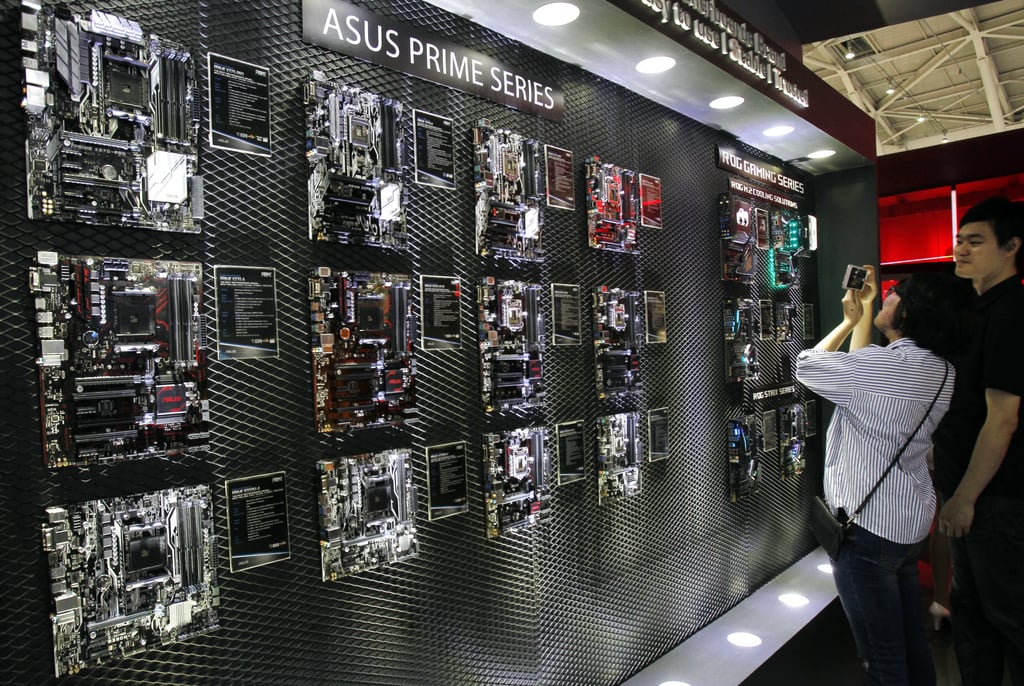
An exhibition of new computer products in Taipei in 2017. Photo: Associated Press
Advertisement
Select Voice
Choose your listening speed
Get through articles 2x faster
1.25x
250 WPM
Slow
Average
Fast
1.25x