Advertisement
Ukraine crisis: Gulf energy exporters refuse to take sides as fears mount in Europe over Russian gas supplies
- Saudi Arabia, the United Arab Emirates and Qatar have signalled they will not be boosting production or diverting cargoes to Europe amid the conflict in Ukraine
- Russia accounts for about one-third of the EU’s gas consumption, fuelling concerns of what might happen if Moscow decides to cut supplies
4-MIN READ4-MIN
9

Saudi Arabia, the United Arab Emirates and Qatar have dashed Europe’s hopes of providing an alternative to Russian hydrocarbons amid the Ukraine crisis, after confirming that they would not be taking sides in the conflict.
The Gulf’s three major oil and gas exporters recently reiterated their neutral stance, and signalled that they will not be boosting production or diverting cargoes - despite the European Union’s urgent need to wean itself off Russian energy supplies as tensions mount.
Repeated lobbying by the United States and France has failed to sway Saudi Arabia, whose de facto leader Crown Prince Mohammed bin Salman told French President Emmanuel Macron on Sunday that Riyadh was committed to its “Opec-plus agreement” with Russia, the world’s second-largest exporter of oil.
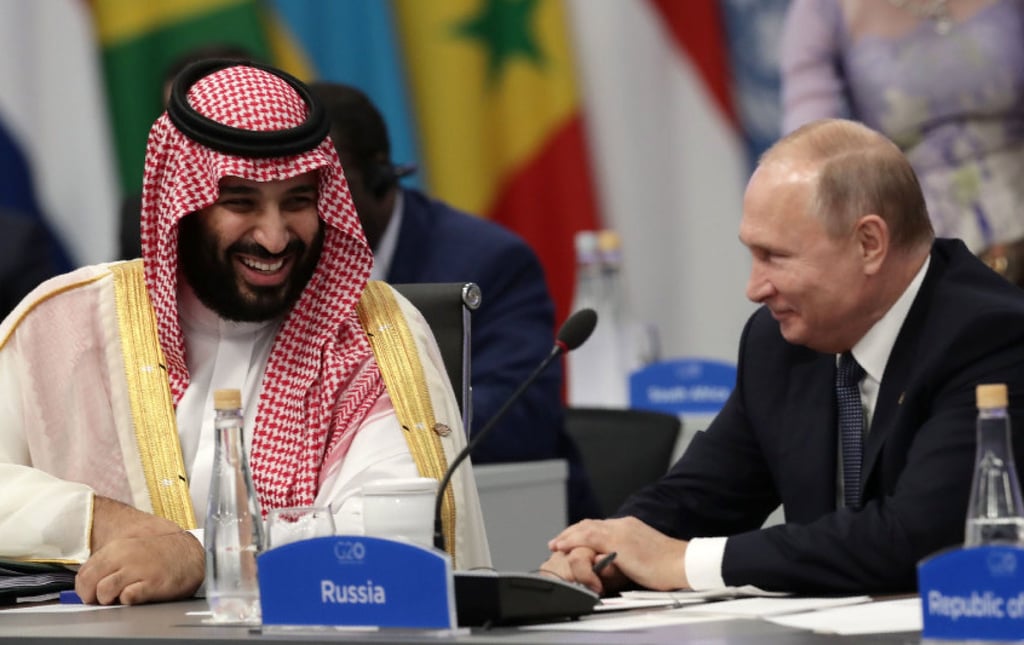
Salman “affirmed the kingdom’s keenness on the stability and balance of oil markets”, according to an official Saudi Press Agency report on the call - repeating the line his father had already told US President Joe Biden twice: in calls on February 9 and last August.
Advertisement
Taken together, Saudi Arabia, the UAE and Kuwait have about 5 million barrels per day of spare production capacity that they could start delivering within 60 days if they so wished. Opec’s 19 members produced about 28 million barrels per day in December, falling 620,000 barrels short of the oil-producers’ cartel agreed daily output because of supply constraints in Africa.
The Gulf’s energy exporters have been reluctant to make use of surplus capacity, however, as demand for oil surges globally amid the widespread lifting of Covid-19 restrictions, quickly eating into excess supplies.
Advertisement
Advertisement
Select Voice
Select Speed
1.00x