Indonesian MotoGP may be over, but land conflicts over the US$3 billion AIIB-backed Mandalika tourism project are revving up
- Many villagers say they have lost land to the special economic zone that in addition to the racing circuit is to host hotels, villas, a theme-park and a golf course
- Land conflicts surrounding the project were highlighted by the UN last year. Despite the success of the motorcycle grand prix, many disputes remain unsettled

The most expensive seat for the Indonesian MotoGP tournament in Lombok was not one of the 15 million rupiah (US$1,046) VIP Premier Class tickets being sold by the organiser; it was a 3.5 metre tall rickety platform built by a local woodworker.
It took Sibawai only one day to build the makeshift seating and cost him next to nothing in materials. But it has taken him at least 30 years, and counting, to fight for the land the platform is built upon.
Sibawai claims ownership of six hectares of land in an area of Lombok the government has designated as the Mandalika Special Economic Zone. His humble house and sprawling farmland of coconut, corn, and cassava fields now sit next to the walls of the Mandalika International Street Circuit, the site of last week’s MotoGP race.
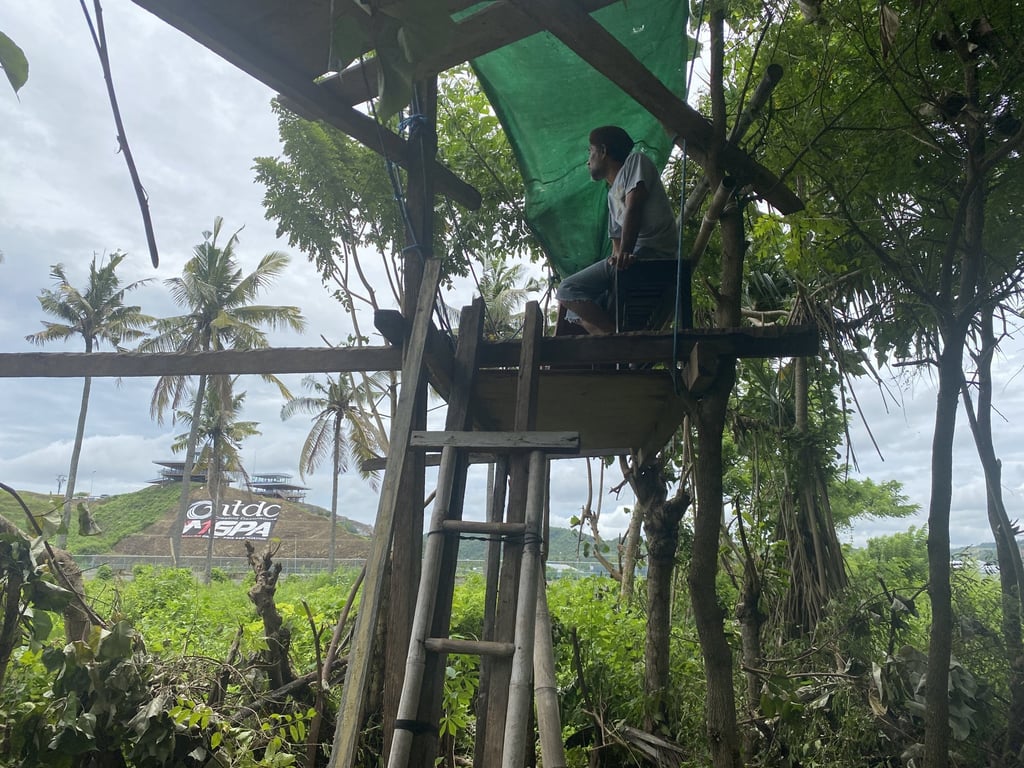
He says some of his land, about 1.2 hectares, was cleared and used to build the circuit – approximately where “bend number 10” of the track is now. Losing that bit of land cost him coconut trees – he has 80 now, down from 300 – and he says he has never been compensated for the loss.
His land falls within the more than 1,035 hectares dedicated to the Mandalika SEZ, a US$3 billion mega tourism project, partly funded by the Asian Infrastructure Investment Bank, on the southern coast of Lombok.
Upon completion, the project will be home not only to the world-class circuit, but also high-end resorts, hotels and villas, a theme-park and a golf course.