In Japan, inflation fears are fuelling a yen for cheap items from Daiso to Don Quijote
- Once viewed as gaudy shops that stock items of inferior quality, Y100 stores are back in favour with Japanese at a time of rising prices and stagnant incomes
- Improved product offerings and quality have also boosted the popularity of discount chains such as Daiso over the years, earning them fans from Singapore to Malaysia and Hong Kong, analysts say

A couple of years ago, Takako Tomura would breeze past the gaudy “Y100 store” close to her home as she went shopping for the little knick-knacks she needed around the house.
But Japan’s retail landscape has changed dramatically in a relatively short space of time, and now she’s a frequent visitor to dollar stores that not long ago were perceived as piled high with cheap products that didn’t last, from a calendar to a kitchen implement, pens or tissues.
“Those shops never used to have a positive image because everything they sold had to be thrown away after being used just a few times,” said Tomura, a 44-year-old homemaker from Yokohama. “So I always thought it was a waste of money.”
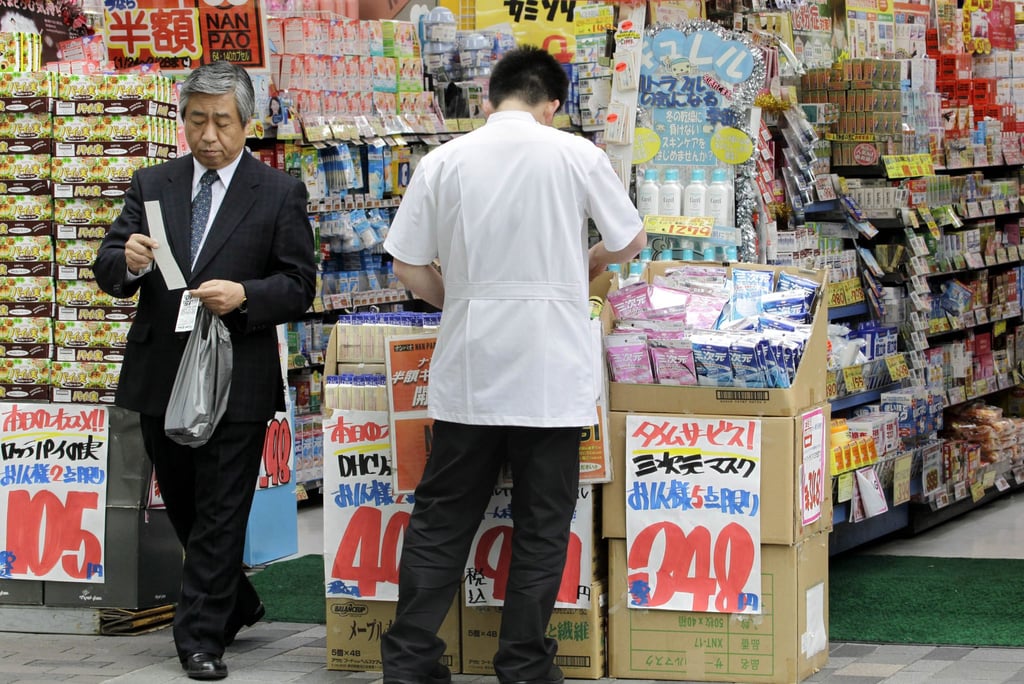
She credits her conversion to her daughter, who needed a new eraser for school and a Y100 store was the closest solution. “I was quite surprised. They are still packed with things and they are not laid out well, so it can be hard to find what you are looking for, but they have things I need, the price is low – and the quality has got better, I think, so it’s good enough,” she said.
And that, say analysts, is the critical change: at a time of rising prices as incomes remain stagnant in Japan, the myriad products on the shelves of previously shunned Y100 stores are “good enough”.
The concept of stores that sell items at a low and uniform price dates back as far as the Edo period, the 264 years up to 1867 that saw seismic changes in Japanese society and industry. The growth of Y100 shops over the last decade has been similarly dramatic.
Statistics released by market analysis firm Teikoku Data Bank show there were more than 8,000 Y100 shops across Japan in fiscal 2020 to April 2021, with the number of stores increasing by 40 per cent in the last decade. Earnings are on a similar upward trajectory, with the four major operators – Daiso, Seria, Watts and Can Do – reporting sales of 900 billion yen (US$7.18 billion), breaking through that threshold for the first time.