Indonesians made to choose between food and school fees as inflation hits poorest hardest
- Inflation in the wake of a recent fuel price increase has child protection specialists worried that the number of school dropouts is trending upwards
- Database issues also mean many poor people who need government help aren’t getting it, leading to warnings ‘a vicious cycle of poverty’ will emerge

I Made Nuka was torn when he had to choose in July between using what little money he had to either send his son to middle school or put food on the table for his family. He ended up choosing the latter option.
His eldest son, I Putu Agus Buda Astrawan, graduated secondary school two years ago but the 21-year-old has nothing to show for it, as Made could not pay off a tuition debt of some 10 million rupiah (US$665). That means Putu’s leaving certificate is still being held by the school, making it almost impossible for him to find work to help the family.
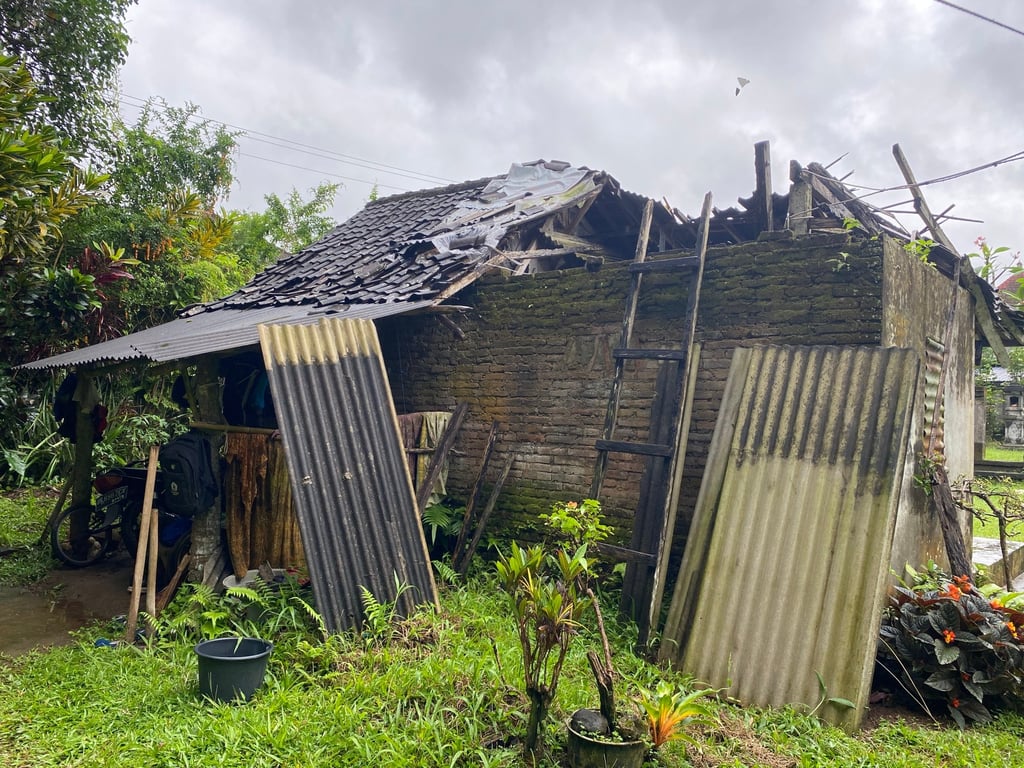
In a good month, Made can earn as much as 2.1 million rupiah – enough to feed his family three times a day, with most meals typically including rice with tempeh, tofu, and vegetables. Meat remains a luxury for him, he said.
The family lives in a ramshackle house measuring just four metres by six metres (13 feet by 20 feet), of which only half is inhabitable because the roof has partially collapsed. Made never graduated middle school himself, and said he was “saddened” that his youngest child, 12-year-old I Kadek Ardita Yana Wiradana, might now face the same fate.
“I feel like a failed parent,” Made told This Week in Asia. “If I could afford it, I would send him to school for 12 years, but what else can I do? This is the situation now. I can only afford to pay for his primary school [education].”