Advertisement
India
This Week in AsiaEconomics

Indian millennials unlock housing recovery as many seek ‘security’ of ownership

  • As millennials and overseas Indians rush to buy homes, India’s once-beleaguered urban housing market is seeing a resurgence after years of stagnation and unsold inventory
  • Stricter laws and oversight around dubious developers and safety standards have also injected fresh life into the property market

Reading Time:4 minutes
Why you can trust SCMP
A cyclist rides past incomplete residential apartments in Greater Noida. India’s property market is seeing a resurgence after years of stagnating prices and unsold inventory. Photo: AFP
Biman Mukherji
When the pandemic was raging worldwide, K. Singh (not his real name) forked out years of savings from his job as an executive with a private airline on a three-bedroom apartment in Gurgaon, on the outskirts of India’s capital New Delhi.

“The job market was shaky, but I took the risk as prices were at rock bottom,” said Singh about his purchase in 2021, adding that the flexibility of working from home enhanced the appeal of home ownership.
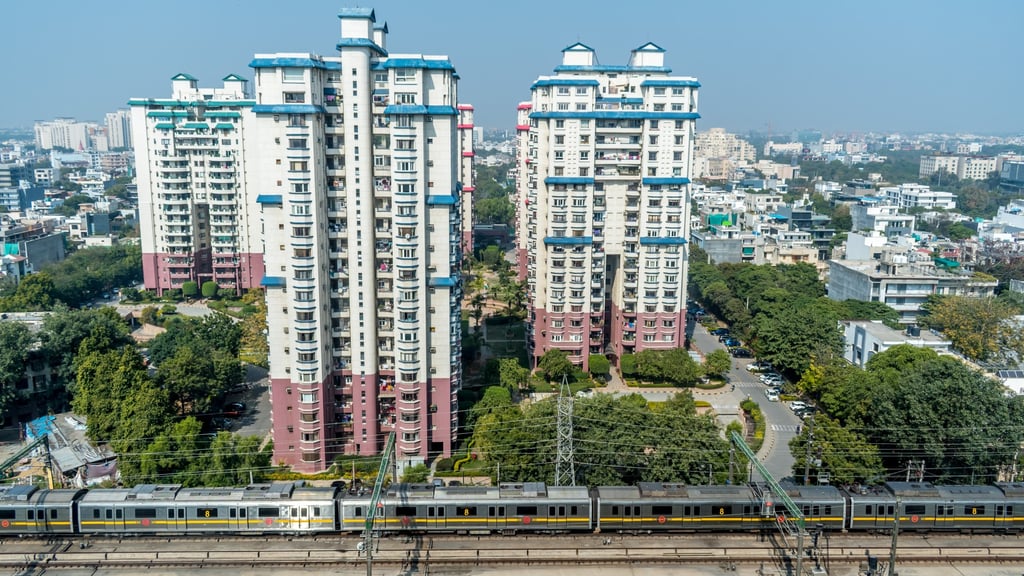
Thanks to a buying rush from other millennials and Indians overseas, Singh’s bet appears to have paid off. Since then, premium-property prices in India’s top cities have risen by 25-30 per cent as the nation’s once-beleaguered urban housing market sees a resurgence after years of stagnation and unsold inventory.
Apartment buildings in Gurugram, India. Photo: Shutterstock

The turnabout has been significant, especially in the country’s national capital region – the parts surrounding New Delhi – where pockets such as Noida were pockmarked by multiple housing projects left uncompleted by dubious developers.

Advertisement

Tens of thousands of homebuyers were left high and dry in a multibillion-dollar industry when some developers stopped midway, declaring bankruptcy after accepting the bulk of construction-linked payments, to avoid finishing costs that need the most funds.

Even the lucky few who got possession typically faced lengthy delays stretching up to a decade as developers would often divert payments to bankroll multiple other housing projects. For years, India’s property market was also a conduit for unaccounted money, with scores of fly-by-night operators and only a handful of established firms.

But the tide started turning after a series of measures, beginning with Prime Minister Narendra Modi’s demonetisation programme in late 2016 which banned certain high-value currencies. More cash transactions have been flushed out following the introduction of a new law in the same year called the Real Estate (Regulation and Development) Act (RERA).
Advertisement
Select Voice
Choose your listening speed
Get through articles 2x faster
1.25x
250 WPM
Slow
Average
Fast
1.25x