Advertisement
Malaysia
This Week in AsiaEconomics

Malaysia seeks to revive China-backed Forest City megaproject – never mind the stray dogs, crocodiles and day drinkers

  • Chinese developer Country Garden’s US$100 billion flagship Malaysia project has fallen on hard times since its launch to much fanfare in 2016
  • But there’s hope that tax and visa incentives, a possible high-speed rail connection and pivoting towards more local buyers will attract investors back

Reading Time:6 minutes
Why you can trust SCMP
14
A view of the Forest City development in Johor seen in the distance from an approach road. Photo: Hadi Azmi
Hadi Azmi

By day, the Chinese-funded Forest City development is a picture of lost promises and decay: stray dogs patrol an empty beach dotted with “Danger Crocodiles – No Swimming” signs, after the reptiles colonised the area in the absence of human residents.

But it is at night when the true costs of the failed US$100 billion punt on the purchasing power of China’s middle class reveals itself, in the lonely lights of the few occupied units of the 30-storey tower blocks that have been built.
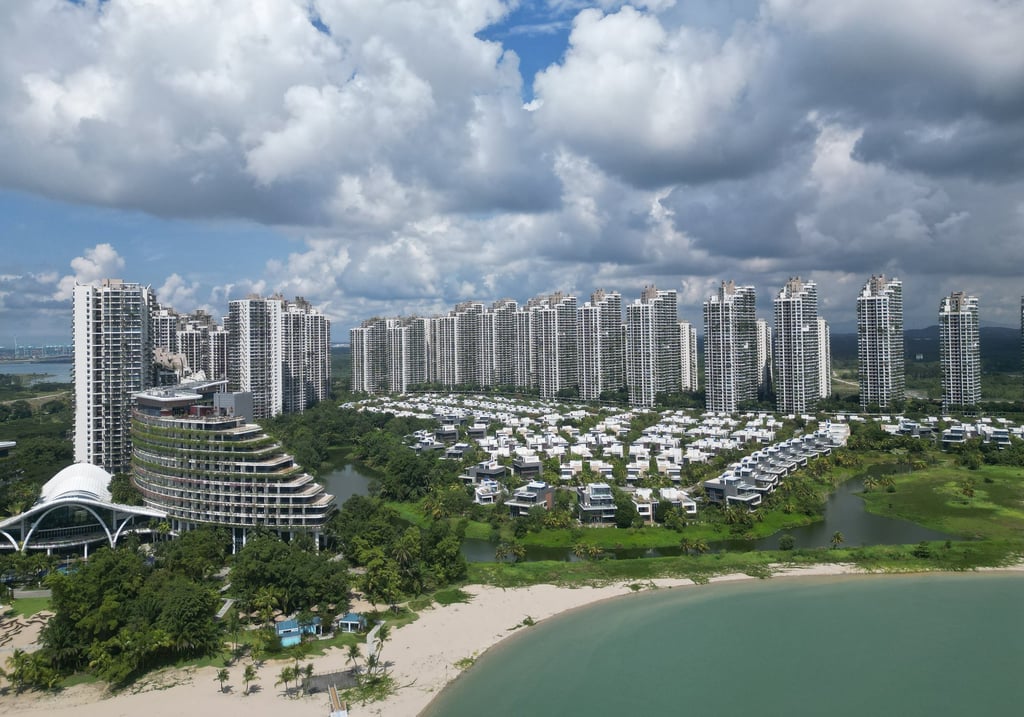
Launched to much fanfare in 2016, the joint venture between Malaysia and a giant Chinese property developer was meant to look very different: a beacon of new homes and office buildings built around manicured gardens, beaches, golf courses and a water park a stone’s throw away from Singapore – but without the congestion and high prices of the city state.
The Forest City development, where tropical undergrowth has reclaimed buildings and boulevards lined by closed shops. Photo: EPA-EFE
Instead, Forest City is for now a flop, another gut-punch to embattled developer Country Garden, which is sinking under billions of dollars of debt as China’s economy slows and fewer buyers take up its developments at home and abroad.
Advertisement

The malaise starts on entering the wedge of reclaimed land in Johor where cars have to navigate a partially collapsed motorway that was built just a few years ago, while dense tropical undergrowth reclaims buildings and boulevards lined by closed shops.

“People in JB don’t go there,” said Darren Lim, a quantity surveyor in Johor Bahru a short drive away. “There is really nothing to do.”

In a bid to revive interest in the beleaguered development, Singapore and Malaysia on Thursday approved a new special economic zone that aims to enhance the cross-border flow of goods and people. Passport-free QR code immigration clearance is set to be introduced under plans for the zone, which would also see a one-stop business/investment centre be established and pave the way for cooperation on renewable energy.
Advertisement
Advertisement
Select Voice
Choose your listening speed
Get through articles 2x faster
1.25x
250 WPM
Slow
Average
Fast
1.25x