Advertisement
Quadrilateral Security Dialogue
This Week in AsiaEconomics

Past failures haunt Quad’s US$20 billion critical minerals push

The initiative aims to break China’s near-monopoly, but private-sector caution and a history of unfulfilled pledges stand in the way

4-MIN READ4-MIN
4
Listen
US Secretary of State Marco Rubio holds a press conference during the Critical Minerals Ministerial meeting at the State Department in February. Photo: Reuters
US Secretary of State Marco Rubio (left) and Indian External Affairs Minister Subrahmanyam Jaishankar shake hands after a press conference at Hyderabad House in New Delhi last month. Photo: EPA
Maria Siow
The Quad’s newly announced US$20 billion critical minerals framework aims to loosen China’s near-monopoly on the materials that power modern defence, technology and clean energy industries.

But analysts say its success will depend on the ability of Australia, the United States, India and Japan – the Quadrilateral Security Dialogue’s four members – to move beyond policy declarations and deliver measurable outcomes.

The initiative, announced after a meeting of Quad foreign ministers on May 27, has widely been interpreted as a response to China’s dominance in global critical mineral supply chains.
Advertisement

According to the International Energy Agency, China is the world’s leading refiner for 19 of 20 strategically important energy minerals, controlling an average of 70 to 90 per cent of global processing capacity for lithium, cobalt, graphite and manganese, among others.
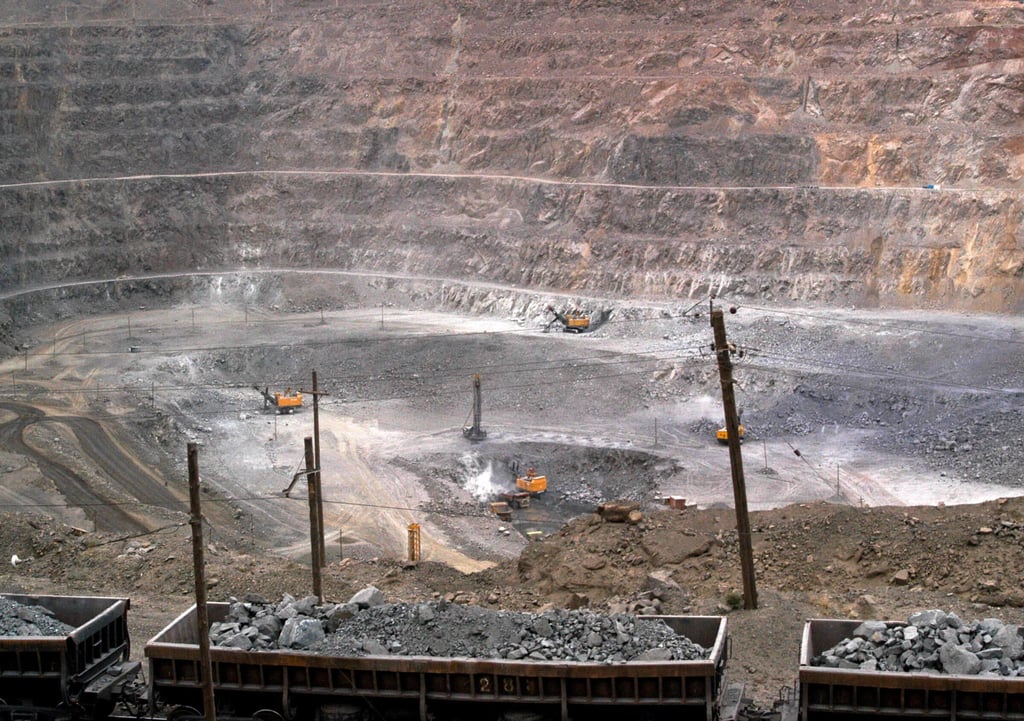
Workers use heavy machinery to dig for rare earths at a mine in northern China’s Inner Mongolia autonomous region. Photo: AP
These materials are essential for electric vehicle batteries, wind turbines, solar panels, semiconductors and aerospace technologies. Beijing has already shown its willingness to restrict supplies, banning select shipments of so-called dual-use goods to Japan earlier this year following a diplomatic dispute.
Advertisement

“China’s dominant position was built over decades through scale, processing capacity and industrial policy,” said William Heidlage, senior director of technology at strategic advisory firm BowerGroupAsia.

Advertisement
Select Voice
Select Speed
1.00x