ExplainerMaguindanao massacre: 10 years after Philippines’ bloodiest political killing, will there finally be closure?
- The verdict in the trial for the 2009 killings – in which 58 people, including 32 journalists, were slaughtered – will be issued on December 19
- The leaders of the powerful Ampatuan family are charged with ordering the killings in a bid to quash an election challenge from a rival clan

Philippine history is dotted with political killings, and this Thursday a Manila court will issue a verdict on one of the bloodiest – the 2009 Maguindanao massacre.
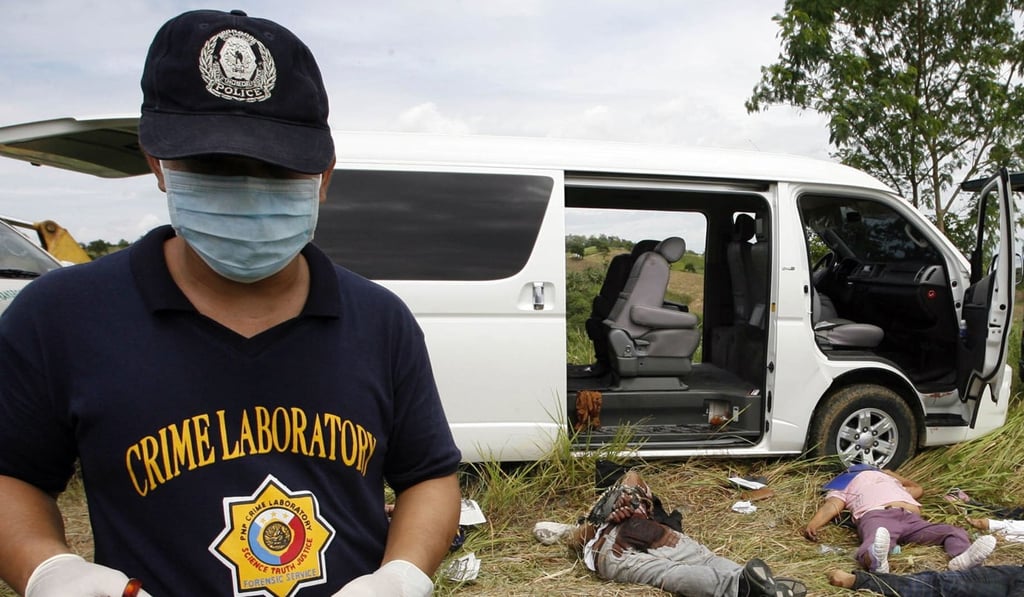
On November 23 that year, 58 men and women – including 32 journalists – were slaughtered and dumped into roadside pits during an attack that was also one of the world’s worst mass killings of media workers.
The leaders of the powerful Ampatuan family, who ruled Maguindanao, are charged with ordering the killings in a bid to quash an election challenge from a rival clan.
The reporters were covering a convoy carrying Genalyn Mangudadatu, her lawyers and relatives as she headed that morning to the nearest poll office to file her husband Esmael’s candidacy certificate in his bid to run as governor of the impoverished southern province.
Esmael had refused to give in to the request of the sitting governor, clan patriarch Andal Ampatuan, Snr, to let his son Andal “Unsay” Ampatuan Jnr run unopposed.
The murders, carried out in broad daylight, exposed how then president Gloria Arroyo had tolerated the Ampatuans’ heavily armed militia as a buffer against Muslim rebels in the south, home to the Catholic nation’s large Islamic minority.