ExplainerHow did migrant worker dormitories become Singapore’s biggest coronavirus cluster?
- Cases in the island nation have more than quadrupled in the past two weeks, propelled by a surge in infections among migrant workers
- The government has upped its efforts amid criticism, with former diplomat Bilahari Kausikan saying ‘we did drop the ball on foreign workers’
Who are Singapore’s migrant workers, and why are so many infected?
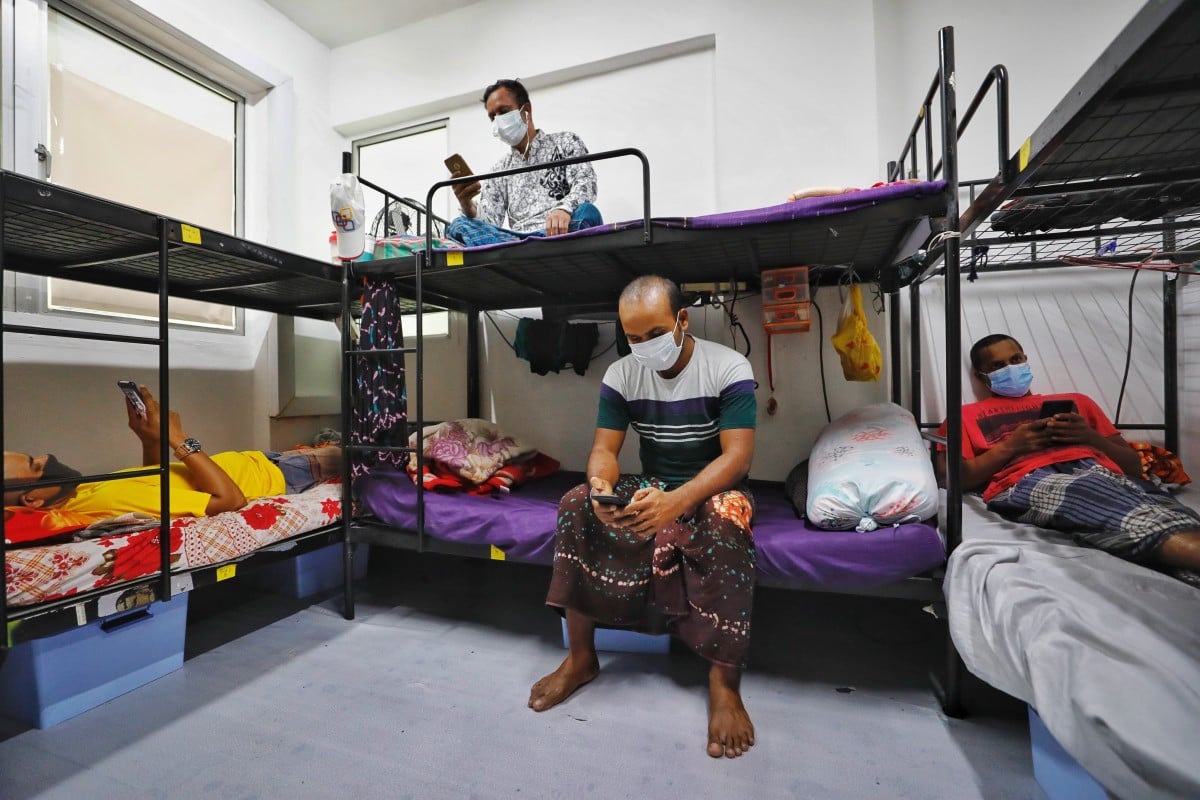
There are 323,000 low-wage migrant workers in the country, who take on jobs shunned by Singaporeans in industries such as construction, estate maintenance and manufacturing. Their accommodation includes 43 mega-dormitories with more than 1,000 workers each, some 1,200 factory-converted dormitories which typically house 50 to 100 workers each, and temporary living quarters with around 40 workers on various construction sites.
The first infected migrant worker infection was reported on February 8, when a 39-year-old Bangladeshi man working at the Seletar Aerospace Heights construction site caught the disease. He had visited Mustafa Centre – a 24-hour shopping centre – before he was hospitalised, and stayed at The Leo dormitory. The Seletar Aerospace Heights work site eventually became a cluster with five infections, but it was contained and only towards the end of March were migrant workers again reporting infections.
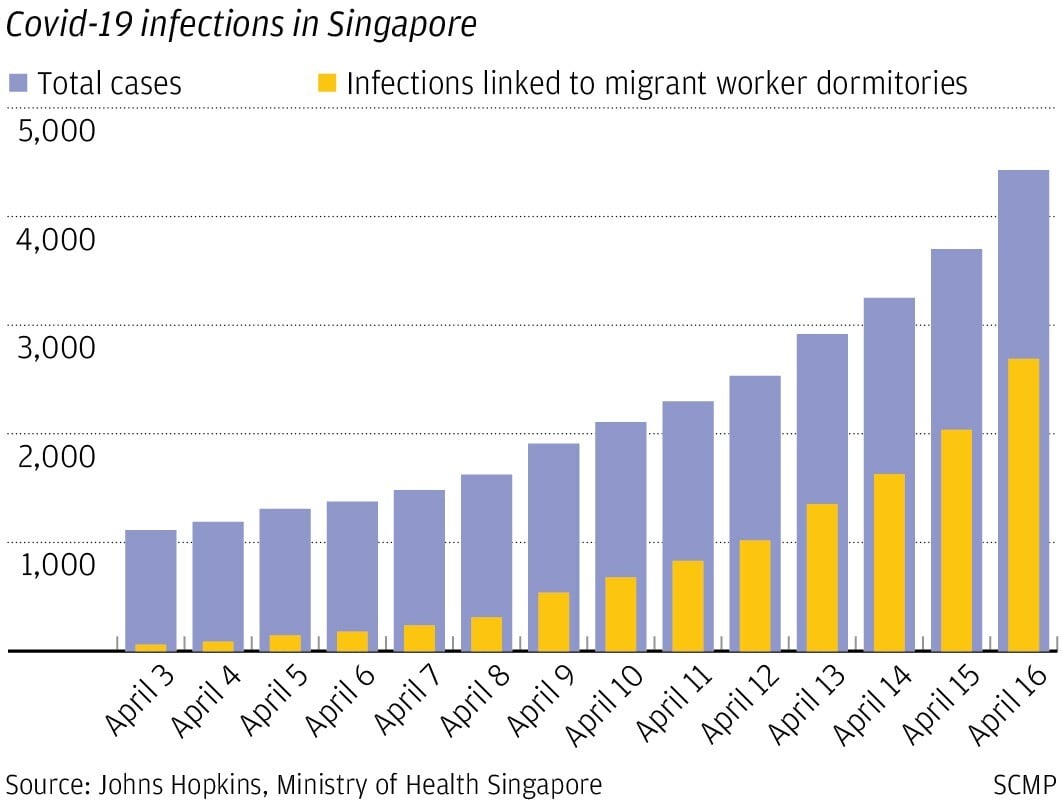
The first dormitory cluster was identified on March 30, with four infections at S11 dormitory. Cases among workers living in dormitories quickly ballooned to 2,689 – representing 60 per cent of all cases in Singapore – of which 979 came from the S11 dorm.
The surge has changed Singapore’s transmission rate (Ro) – the number of newly infected people from a single case – from “well under one” before the outbreaks in dormitories to “somewhere closer” to one, said director of medical services Kenneth Mak.