-
Advertisement
US-China trade war
This Week in AsiaGeopolitics

Asia’s ‘big six’ who will be in big trouble if China pulls the yuan trigger

Malaysia, Singapore, Philippines, Thailand, Vietnam and Indonesia are the most exposed if caught in the crossfire of the US-China trade war

Reading Time:2 minutes
Why you can trust SCMP
Foreign exchange rates on the trading floor of the Philippine Stock Exchange. Photo: Bloomberg
Bhavan Jaipragas

OECD data shows Malaysia, Singapore, Philippines, Thailand, Vietnam and Indonesia — Southeast Asia’s ‘big six’ economies — are among the most exposed economies to China in terms of trade.

INDONESIA: Southeast Asia’s biggest economy in July put in place pre-emptive measures bracing for the trade war. A weak yuan could hurt Chinese manufacturers’ ability to buy raw materials such as timber. The government has said it will “optimise the use of fiscal tools in the form of import and export taxes, as well as harmonising import taxes, so that industries would have their competitive edge and are able to export”.
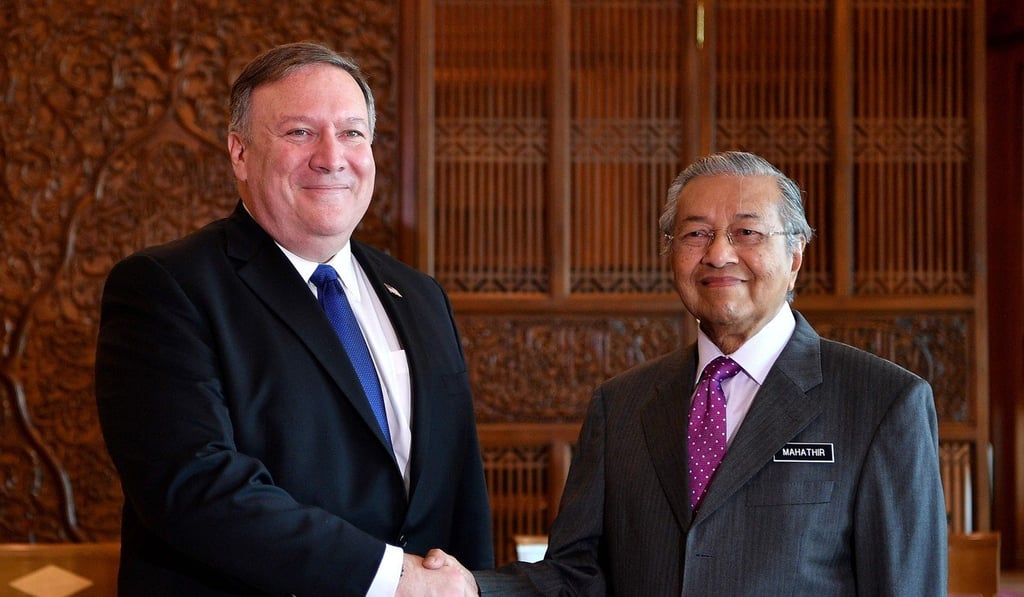
Malaysian Prime Minister Mahathir Mohamad shakes hands with US Secretary of State Mike Pompeo. Photo: AFP
Advertisement

MALAYSIA: A trade task force set up by Malaysia’s three-month-old government concluded this week the impact from the preliminary round of US and Chinese tariffs was “relatively minimal”. The trade minister Darrell Leiking said in July he saw a silver lining in the trade war. “China is a huge importer of our goods and we import a lot from them as well. I believe they will look into us even more [now] that a lot of their products are unable to go or are being tariffed.”
PHILIPPINES: Ratings agency Moody’s on Friday said the Philippines was “not as exposed” as its neighbours to the trade war, and was likely to maintain economic growth driven by domestic demand. Still Harry Roque, spokesman for President Rodrigo Duterte, has said the trade and finance ministries were undertaking “thorough” studies “identifying where we are vulnerable given the kind of export products we have”. Malaysia’s RHB Bank has estimated that 16.9 per cent of Philippine shipments abroad are from China’s exports.
Advertisement
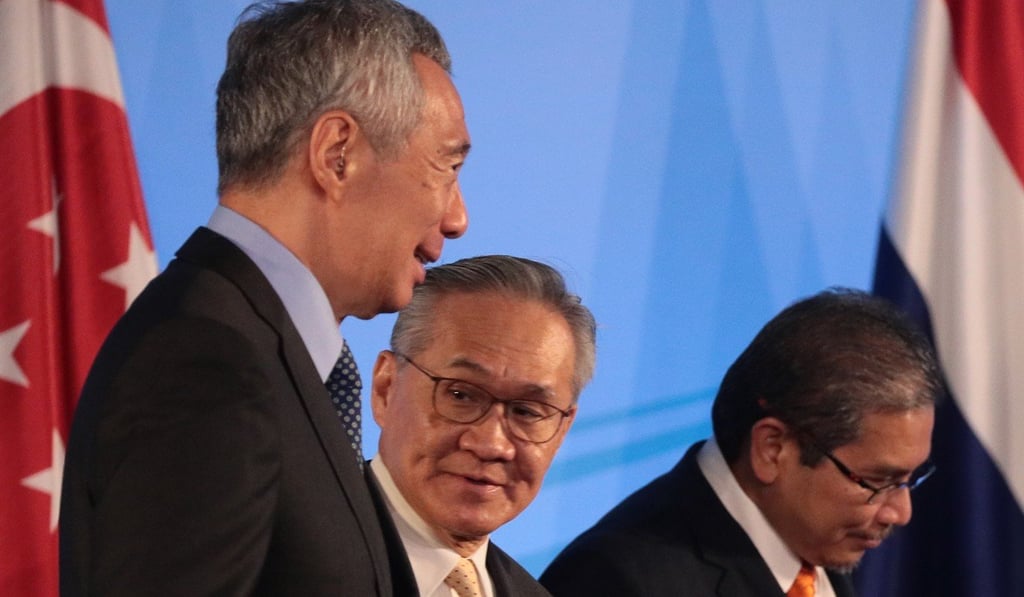
Singapore Prime Minister Lee Hsien Loong, left, Thai Foreign Minister Don Pramudwinai, centre, and Brunei Second Minister of Foreign Affairs and Trade Erywan bin Pehin Yusof. Photo: EPA
Advertisement
Select Voice
Choose your listening speed
Get through articles 2x faster
1.25x
250 WPM
Slow
Average
Fast
1.25x