-
Advertisement
Pakistan
This Week in AsiaGeopolitics

In Pakistan, Chinese money grapples with a Karachi-Lahore divide

A new administration in Islamabad is spooking Beijing with its calls for transparency over the US$62 billion China Pakistan Economic Corridor, but it may be a reflection of internal rivalries that have long been a problem

Reading Time:7 minutes
Why you can trust SCMP
Pakistan’s new government is leading the pushback against the China Pakistan Economic Corridor. Photo: AFP
Tom Hussain

In 2007, a hurriedly arranged ceremony took place at Gwadar, an Arabian Sea port financed by Beijing and built by Chinese state firms. But the keys to the port were not handed over to the Chinese state port operator by the Pakistani government, as was anticipated. Instead, they were handed over to the local representative of PSA Corp, the Singapore port authority. There were few Singaporeans at the event; the deal was sealed with their local partner Aqeel Karim Dhedhi, a self-made billionaire widely viewed in Pakistan as the blunt edge of powerful business interests centred in Karachi.

In one fell swoop, the Karachi business lobby prevented China from breaking the city’s iron grip over Pakistan’s international trades. Working in concert with United States-backed military dictator General Pervez Musharraf, Pakistan’s president at the time, the lobby also did a massive favour to the US and European governments, on whose export markets and preferential tariff regimes it had depended since the 1960s.

Eleven years on, as a new Pakistani government led by World Cup-winning cricket captain Imran Khan settles in, West-dependent interests are leading the pushback against the China Pakistan Economic Corridor (CPEC), the US$62 billion showcase project of President Xi Jinping’s “Belt and Road Initiative”. They have secured key cabinet slots. Abdul Razak Dawood, a scion of Pakistan’s biggest business house, Dawood Hercules, has been inducted as Prime Minister Khan’s special adviser on the economy, investment, trade and textiles. He works closely with Finance Minister Asad Umar, a key Khan aide and the previous chief executive of Engro Corp, a business owned by the Dawood dynasty.
Advertisement

The usually media-shy Dawood granted his first official interview to the Financial Times as Wang Yi, China’s foreign policy tsar, flew into Islamabad last weekend to engage the Khan administration in talks about the future of the CPEC.
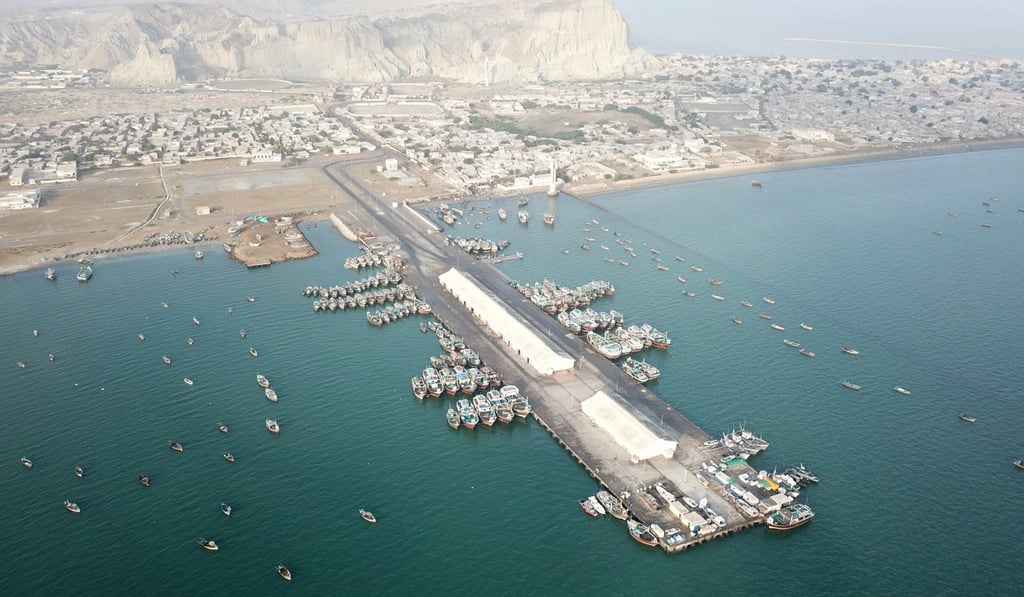
The port of Gwadar was financed by Beijing and built by Chinese state companies. Photo: Xinhua
Advertisement

“The previous government did a bad job negotiating with China on CPEC – they didn’t do their homework correctly and didn’t negotiate correctly so they gave away a lot,” Dawood said in the interview, published as the Chinese team left for home. “Chinese companies received tax breaks, many breaks and have an undue advantage in Pakistan; this is one of the things we’re looking at because it’s not fair that Pakistan companies should be disadvantaged.”

Advertisement
Select Voice
Choose your listening speed
Get through articles 2x faster
1.25x
250 WPM
Slow
Average
Fast
1.25x