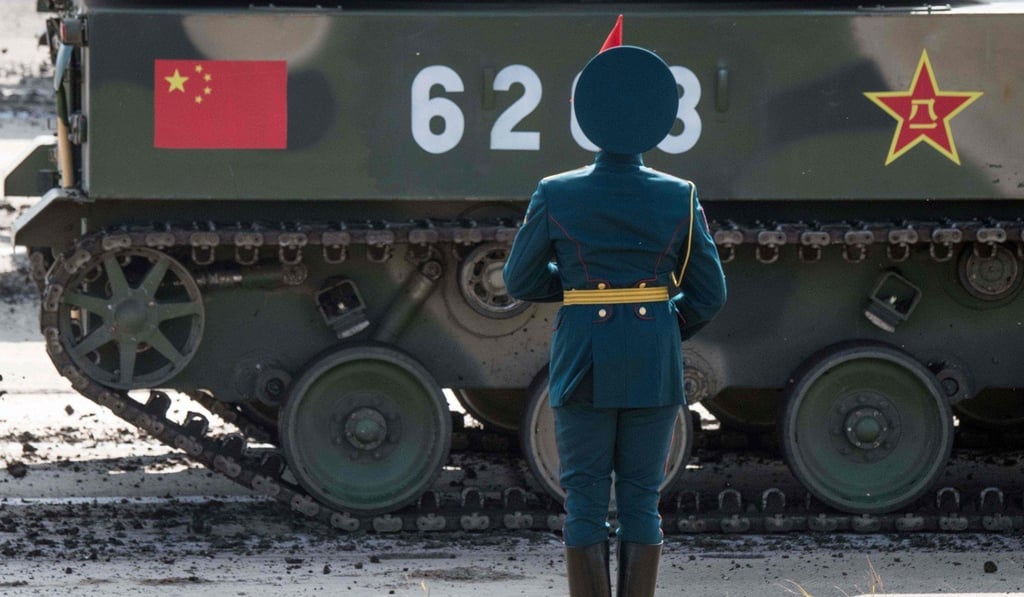
China and Russia: new BFFs thanks to an insecure US
Recent war games highlight Moscow and Beijing’s increasingly closer ties, which are based on a convergence of national interests, a similar view of the world order – and the need for an ally against a belligerent America

Both positions justify the policy of the US and its allies. The first serves the interests of those who advocate a military build-up and increased defence spending to counter an imaginary military threat, while the second justifies levelling sanctions and trade pressure against both countries simultaneously – arguing, meanwhile, that such an approach does not impel them to form an anti-US alliance.
In fact, relations between Moscow and Beijing have been improving steadily for more than a quarter of a century. Although they quarrelled in the 1960s and 1970s, the two countries have been growing closer since the final years of the Soviet Union and have now reached the point of “strategic partnership and interaction”.
The very fact that China changed leaders several times during that period and Russia transformed its entire political system indicates that the Moscow-Beijing rapprochement is based not on transient ideology or political goals, but on a convergence of national interests.
Globally, both countries favour preserving the post-second world war system of international law based on the United Nations and its Security Council. This is understandable given Russia and China, even together, are weaker than the US and its allies, but their Security Council veto puts them on a par with the US and gives them control over UN decisions. In this sense, the US – kept in check by international law – is a revolutionary force in international relations, while Russia and China are conservatives.