Could Hong Kong’s ‘one country, two systems’ work for Korea?
- Forget the nukes: real issue taxing Korean minds is reunification.
- Options include: European-style union, a communist-capitalist merger a la Germany and an idea Hongkongers will find familiar

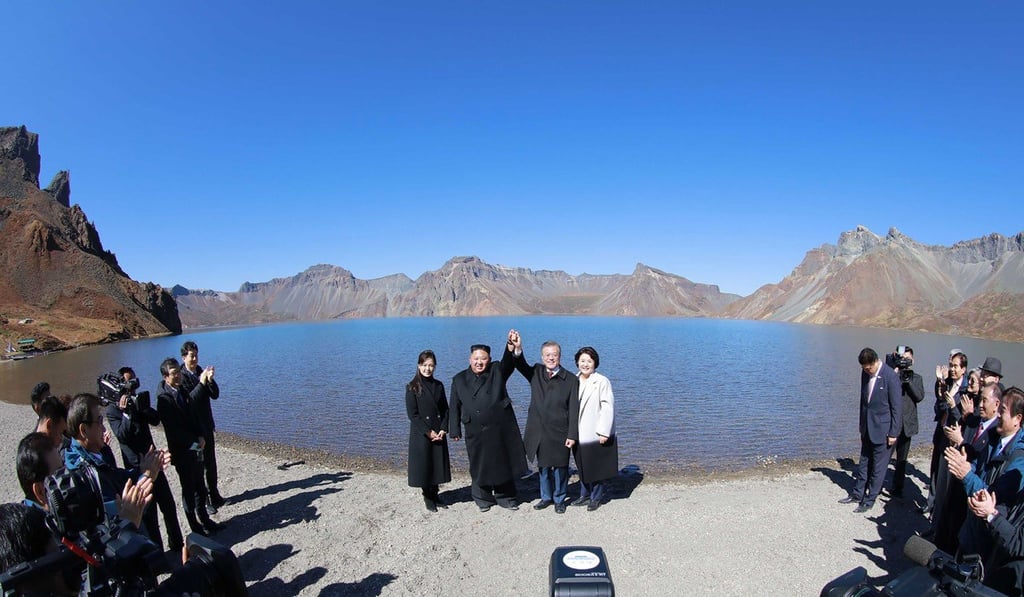
“Our people are resilient,” said Moon to 150,000 Pyongyang residents at the May Day Stadium in Pyongyang last month. “Our people love peace. And our people must live together. We had lived together for five thousand years but apart for just 70 years.”
“We expect debate about plans for unification to kick off in earnest in the second half of next year,” said Han Sung, a spokesman for the left-leaning civic group People’s Congress for Peace Federation. “When it comes to plans for unification, the government’s job isn’t important, so much as the role of the citizens.”
With inter-Korean relations at their warmest in years, a growing chorus within South Korean politics, academia and civil society has steered discussion towards various models of political integration with the North – ranging from a federation to a union of states – that would mark the first practical steps toward unification. Among the most hotly debated options are a federal arrangement sometimes likened to the “one country, two systems” agreement that has governed Hong Kong since the territory’s handover from British to Chinese rule; a Korean version of the European Union, said to be preferred by Moon; and absorption by the South that would result in the sort of liberal democracy that arose in Germany after the fall of the Berlin wall – held up by supporters as a textbook example of how to merge a capitalist and communist state.
But each of these visions comes with problems. While both Koreas, and both sides of South Korean politics, officially agree on the need for eventual unification, there is no such consensus on exactly how to get there. It is an ideologically charged and often heated debate in South Korea, where the fundamental political divide is centred on the question of how to manage relations with its bellicose and authoritarian neighbour.