OpinionShould China be worried about the US-Asean sea drill?
- Scope of the Asean-US Maritime Exercise next week will be limited, to avoid giving Beijing any wrong idea about Southeast Asian countries joining a US-led China-containment scheme
- But it still sends a political signal about how Southeast Asian nations will approach South China Sea issues with Beijing

The upcoming Asean-US Maritime Exercise has fuelled various interpretations, with some trying to frame it in “black and white” terms – that Asean is shifting towards the United States instead of China, especially because this drill will come after the Asean-China Maritime Exercise last August. This interpretation misses the point about Asean’s long-standing policy towards major power engagement, which is one of inclusivity, not exclusivity.
And there are also nuances that may not have been apparent to some readers. A clear difference exists between “Southeast Asia” and “Asean”. Firstly, Southeast Asia is no monolithic region – it is essentially a collection of different countries each with its unique national contexts. Asean, being a bloc of 10 Southeast Asian countries, does not have any collective defence and security mechanism akin to what the European Union has with its Common Security and Defence Policy, save for common principles and visions laid out in the ever-expanding slew of Asean joint declarations. Individual Asean member states enact defence and security policies based on their national interests, and that also relates to their engagements with external parties.
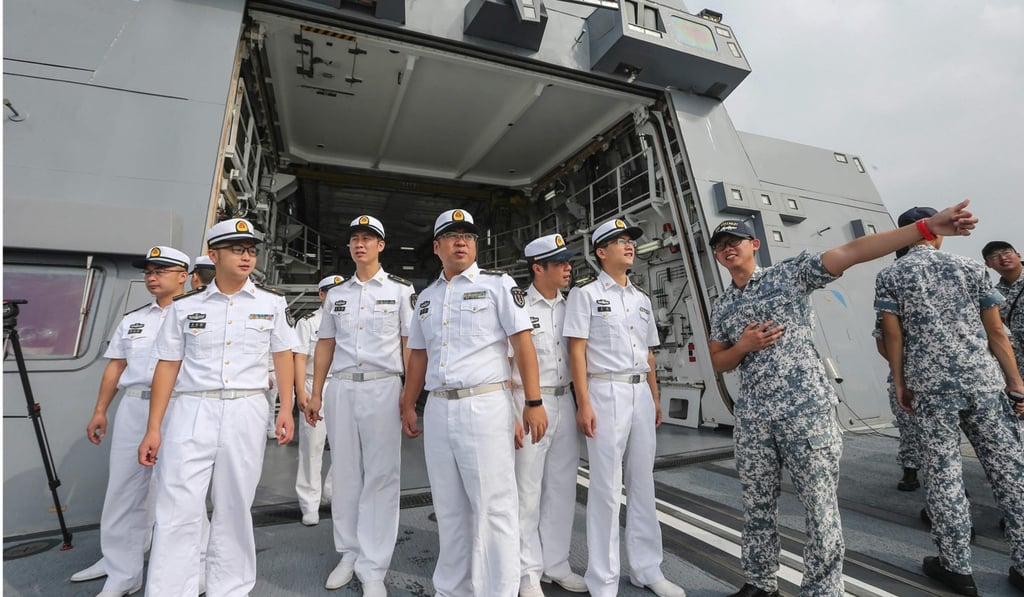
Seen in this light, the Asean-US Maritime Exercise is not the first multilateral exercise between Southeast Asia and the US as some reports have claimed. As Prashanth Parameswaran, an expert on Southeast Asian security affairs, has pointed out, the US has long had multilateral exercises with Southeast Asian states, including the Cooperation Afloat Readiness and Training (CARAT) and the Southeast Asia Cooperation Training (Seacat) exercises.
He also pointed to efforts that have been undertaken over the past few years to both boost the complexity of these drills and to further multilateralise them as well – including one such proposal dating back to the later years of the Obama administration to hold the first US-Asean maritime exercise.
Not all Asean states have joined every iteration of Seacat since 2002. Myanmar joined only in 2017, for instance. The inaugural Asean-US Maritime Exercise will see all 10 states participating in a single setting involving at least eight ships along with aircraft. Not all will dispatch hardware to the drill, but those who do not will at least deploy personnel.