Modi says there’s enough food for India during coronavirus lockdown, but supply chains are choked
- India has unveiled a US$22 billion package to provide food rations and cash transfers to about 800 million people hit by the coronavirus lockdown
- Although India had a record harvest and has enough reserves, there are concerns about the food supply chain disruptions, especially for the poor

But authorities were quick to offer reassurances of sufficient grains such as wheat and rice for the country’s 1.3 billion people for the next four months, thanks to record harvests.
On Thursday, Finance Minister Nirmala Sitharaman announced an initial 1.7 trillion rupee (US$22.5 billion) package chiefly targeting poor households, while prioritising food distribution.
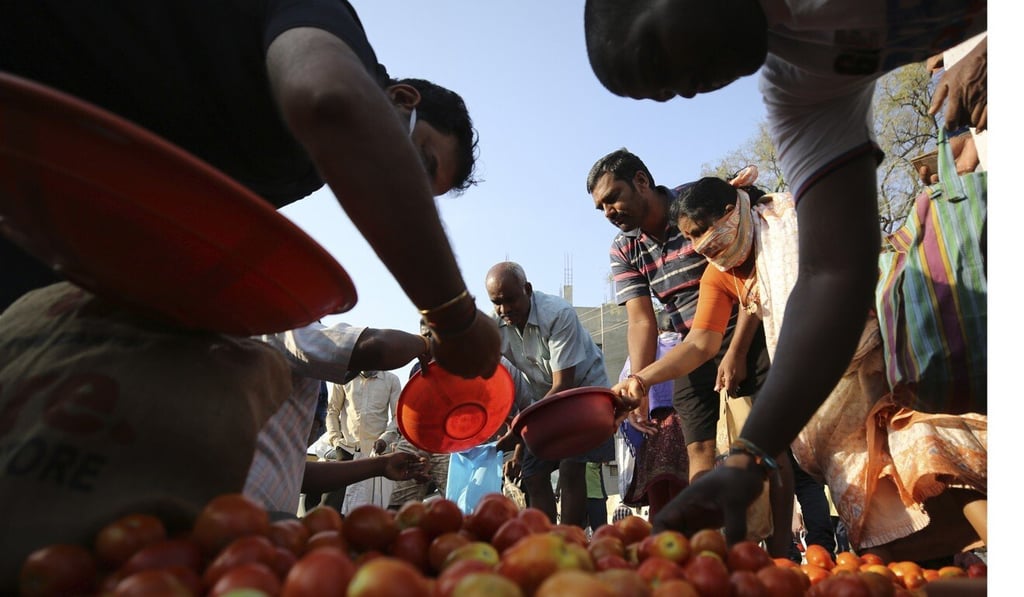
Under the newly launched “Pradhan Mantri Gareeb Kalyan Jojana” (Prime Minister’s Poor Welfare Scheme), each individual who already benefited from a subsidised public distribution system will be able to receive an additional five kilograms of either wheat or rice, and each household will get one kilogram of pulses free of cost for the next three months. The package will benefit about 800 million people.
Direct cash transfers of between 500 and 2,000 rupees will also be made to the most economically vulnerable, such as farmers, daily wage labourers, construction workers, disabled people, poor widows, and women self-help groups.