Advertisement
Coronavirus pandemic: All stories
This Week in AsiaHealth & Environment

Coronavirus: Singapore urged to consider migrant workers’ mental health amid ‘circuit breaker’ lockdown

  • More than 323,000 workers in the city state are currently confined to cramped dormitories and other places of residence with up to 20 people per room
  • An online survey conducted this month found the majority of migrant worker respondents were expressing feelings of sadness and depression
Reading Time:3 minutes
Why you can trust SCMP
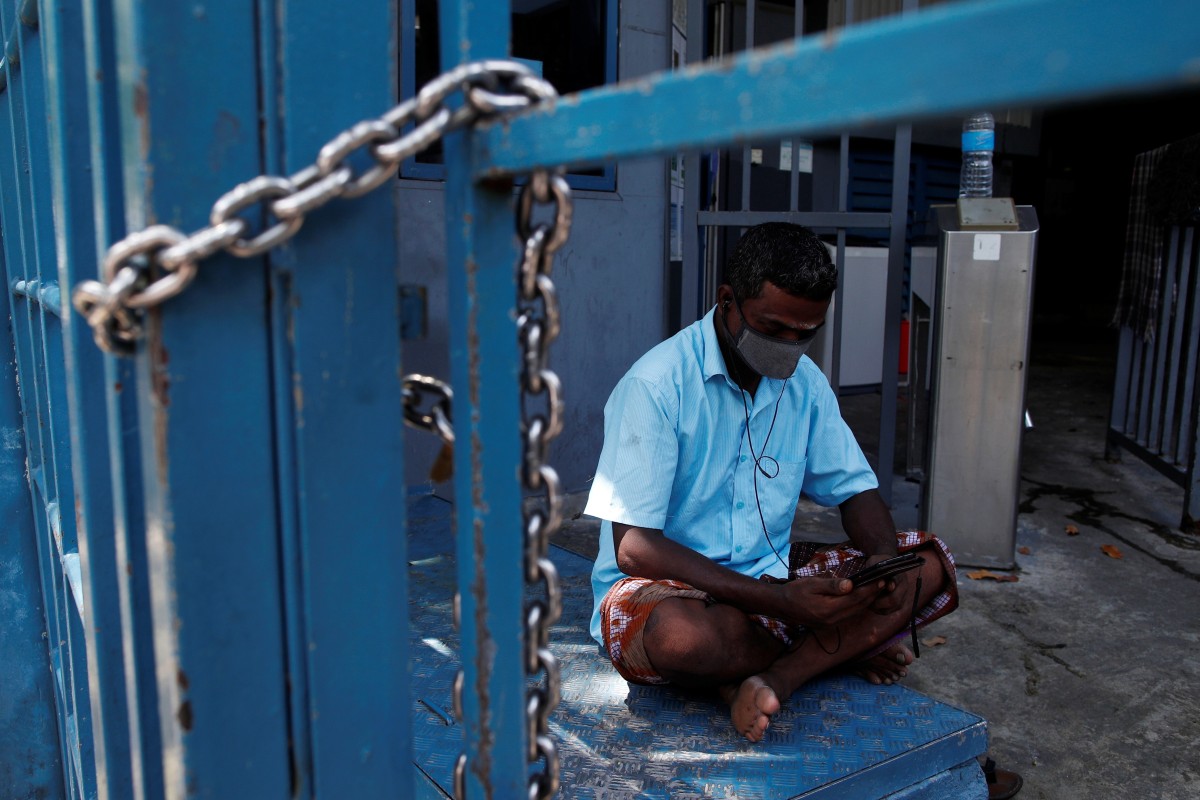
A migrant worker pictured in a dormitory under lockdown in Singapore on Wednesday. Photo: Reuters
Bhavan Jaipragas
With Singapore’s “circuit breaker” partial lockdown extended until June 1, authorities have been urged to take into account the mental health of quarantined migrant workers by researchers and activists behind an ongoing study of the community.

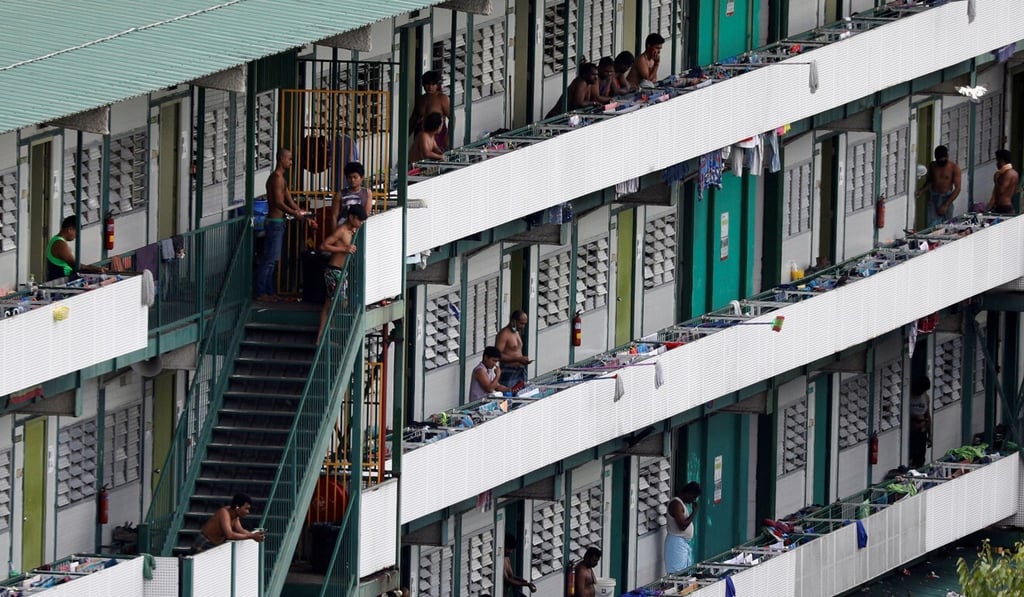
More than 323,000 migrant workers in the city state are currently confined to 43 mega-dormitories and 1,200 other similar places of residence where they are largely restricted to cramped rooms which house up to 20 people.

Such conditions mean the restrictions imposed on April 7 to fight the coronavirus – which were initially set to end on May 4 – have proved far more gruelling for migrant workers than other residents, who are allowed to leave their homes.
Advertisement
Nearly 80 per cent of the country’s 11,178 infections come from within the migrant worker community, following a series of outbreaks inside their dormitories that began in late March.
Migrant workers are pictured outside their rooms at a dormitory in Singapore earlier this month. Photo: Reuters
Advertisement
Mohan Dutta, a New Zealand-based professor who studies marginalised communities, said the stress the workers may be facing – amid worries about being the next to be infected and anxiety about a loss of wages – could have a long-term impact on their mental health.

Most of the more than 100 workers who took part in an online survey Dutta conducted from April 7 to April 20 expressed feelings of sadness and depression, with 68 per cent picking the options “somewhat agree” “agree” or “strongly agree” when asked if they were depressed as a result of the coronavirus.

Advertisement
Select Voice
Choose your listening speed
Get through articles 2x faster
1.25x
250 WPM
Slow
Average
Fast
1.25x