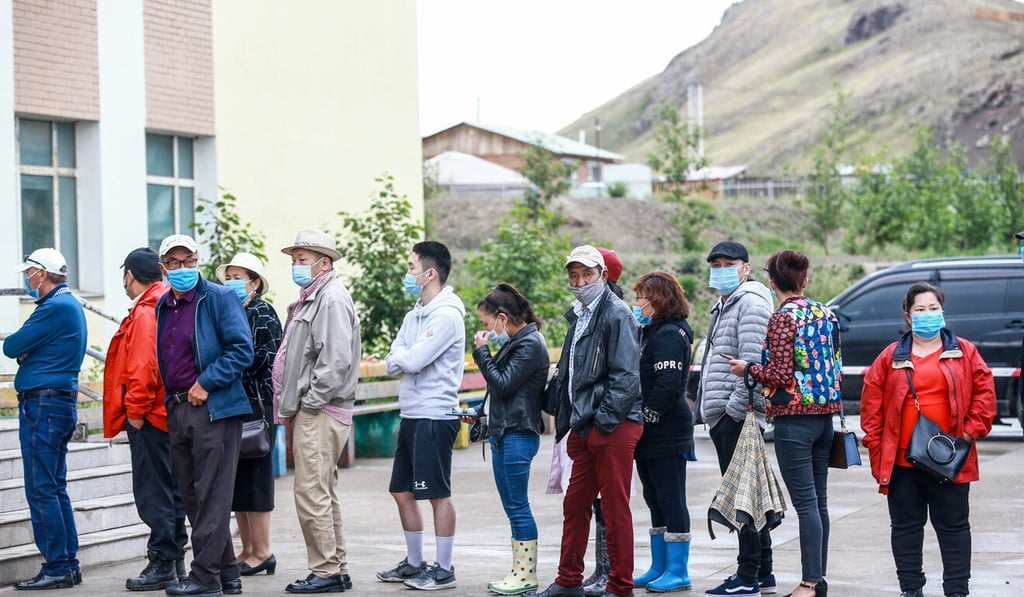
Mongolia pins hopes on vaccine, containment after its first coronavirus death
- After being praised in November for its low infection rates, the country has now reported a total of over 1,000 Covid-19 cases
- The government is considering various inoculation options, but analysts say there is some resistance in the country to a vaccine from China

Before the death of a 76-year old woman from Covid-19 on Saturday, the country of 3.4 million had reported no fatalities from the disease since its first Covid-19 case was discovered in March. The woman was said to have other prior health complications, including high blood pressure, diabetes and hepatitis C, reported national news agency Montsame.
On Monday, the country reported 16 new cases, bringing the total number of cases to 1,098, with 711 recoveries. But as recently as early November, there had been no local transmissions and only 346 imported cases before a surge occurred.
Some analysts attributed the low infection rates to the fact that Mongolia is one of the most sparsely populated countries in the world. However, many also credited the government for closing its border to China on January 22, and to the rest of the world in March.
But the surge in the country in early November, including the first locally transmitted case, prompted authorities to announce a curfew in the capital, Ulaanbaatar, where residents were asked to stay home and leave only to buy food and essentials. All businesses, except for essential services, were also closed.