Indonesian women face harassment and bullying for not wearing Islamic headscarves, Human Rights Watch says
- The rights group found that more than 60 discriminatory local laws that enforce dress codes for women had been implemented in the country since 2001
- Some women and girls who choose not to wear hijabs have been kicked out of school or have lost jobs, HRW said, with some ending up feeling ‘mentally isolated’

HRW said more than 60 discriminatory local, regional and provincial by-laws that enforce dress codes for women and girls had been implemented since 2001, three years after the Southeast Asian nation transitioned to democracy. The dress codes, it said, are a sign of rising intolerance and religious conservatism in the country, which officially recognises six religions even though 85 per cent of its 270 million population is Muslim.
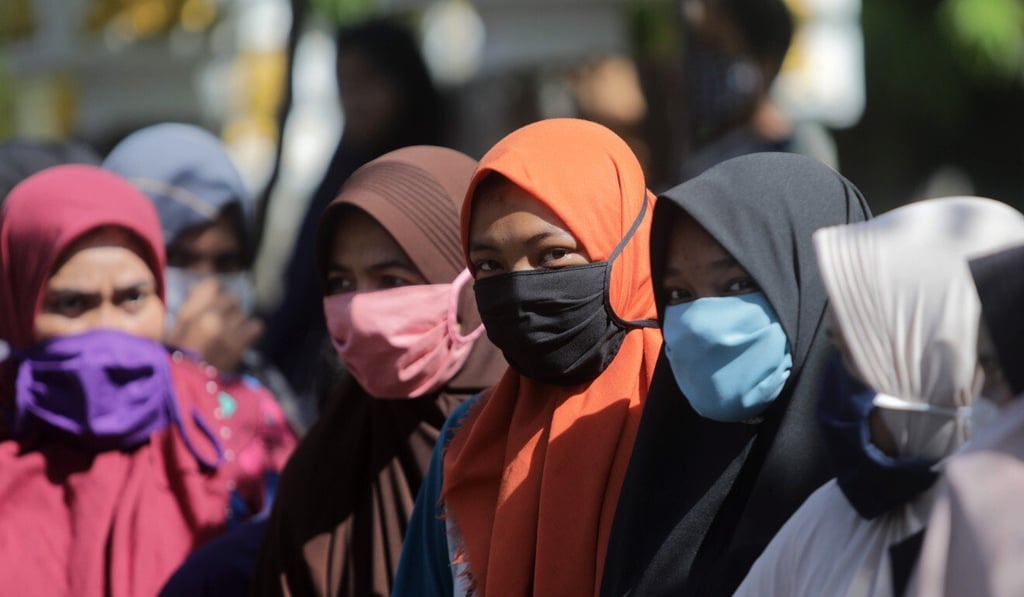
The national government in 2014 introduced regulations on school uniforms, but the wording of the law seemed to suggest that female Muslim students should wear a Muslim headscarf – the hijab, or jilbab as it is known in Indonesia – as part of their school uniforms.
“In practice, many regencies and provinces interpreted [the suggestion that a jilbab should be worn] as compulsory, so you had the situation where local education officers and public schools began to rewrite the school rules and to enforce the jilbab as part of the school uniforms,” Elaine Pearson, the Australia director of Human Rights Watch’s Asia Division, told reporters on Thursday.