Coronavirus: India sees melting crematorium, overflowing graveyards and overwhelmed hospitals as infections surge
- The country reported a record 184,372 new coronavirus cases on Wednesday, according to health ministry data, bringing the nationwide tally of infections to 13.9 million
- Whatever extra beds and facilities were added last year to cope with the first wave of infection have been overwhelmed by the more than tenfold spike in case numbers over the past month

Whatever extra beds and facilities were added last year to cope with the first wave of contagion have been overwhelmed by the more than tenfold spike in case numbers India has seen over the past month.
The country reported a record 184,372 new coronavirus cases on Wednesday, according to health ministry data, bringing the nationwide tally of infections to 13.9 million. Deaths also rose by 1,027, the highest daily figure since October, raising the nation’s toll since the start of the pandemic to more than 172,000.
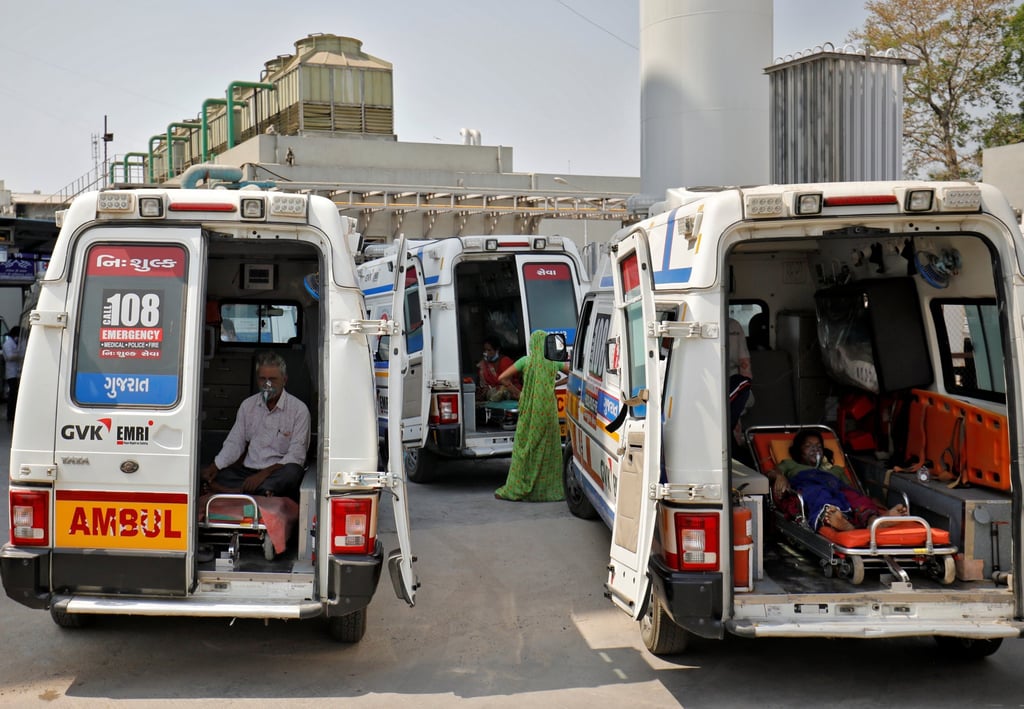
In Gujarat, some families have had to wait for eight hours or more in temperatures nearing 40 degrees Celsius to perform last rites for their loved ones, while in Mumbai, a hospital’s reception area was overrun by angry relatives on Tuesday after 10 Covid-19 patients died – allegedly following an oxygen shortage.
Maharashtra state, where Mumbai is located, is the epicentre of India’s second wave – accounting for about a quarter of all the country’s cases. In one district, a woman was photographed hooked up to an oxygen cylinder in an autorickshaw on the street as she waited for treatment. A full lockdown of the state lasting until the end of April was set to be implemented at midnight on Wednesday to control the spread.
Both private hospitals and government-run facilities are swiftly being overrun. “They just keep coming in,” said one junior doctor at Holy Family Hospital in New Delhi. “The next couple of months, until this wave peaks, are going to be hell.”
The Indian capital alone recorded 13,500 new infections on Wednesday, its highest tally in six months. By lunchtime, 93 per cent of the city’s intensive-care beds with ventilators were occupied, with patients and their relatives seen queuing outside some hospitals.