In India’s oldest avian sanctuary, Vedanthangal, a pollution-free vision turns toxic
- Vedanthangal, a tourist hotspot so beautiful it has inspired songs, is supposed to be protected from pollution. So why are trees wilting, animals dying, skin diseases appearing and farmers abandoning their land?
- Villagers have pointed the finger at a factory run by the pharmaceutical giant Sun Pharma

The core area of the sanctuary is about 30 hectares – the size of about 56 football fields – and is surrounded by the Pudupattu lake, which links to smaller bodies of water that flow around grassy mud islands that are home to lush shrubs, paddy fields and trees with large canopies.
Vedanthangal has been a protected reserve since the start of the 19th century but in 1998, it was officially designated a “wildlife sanctuary”, restricting human activity in the area. While the creation of villages and farming were still allowed – the birds’ nitrogen-rich droppings made for good harvests in the paddy fields – pollution-causing industries were prohibited and new commercial activities such as manufacturing and mining were not allowed within 5km of the lake.
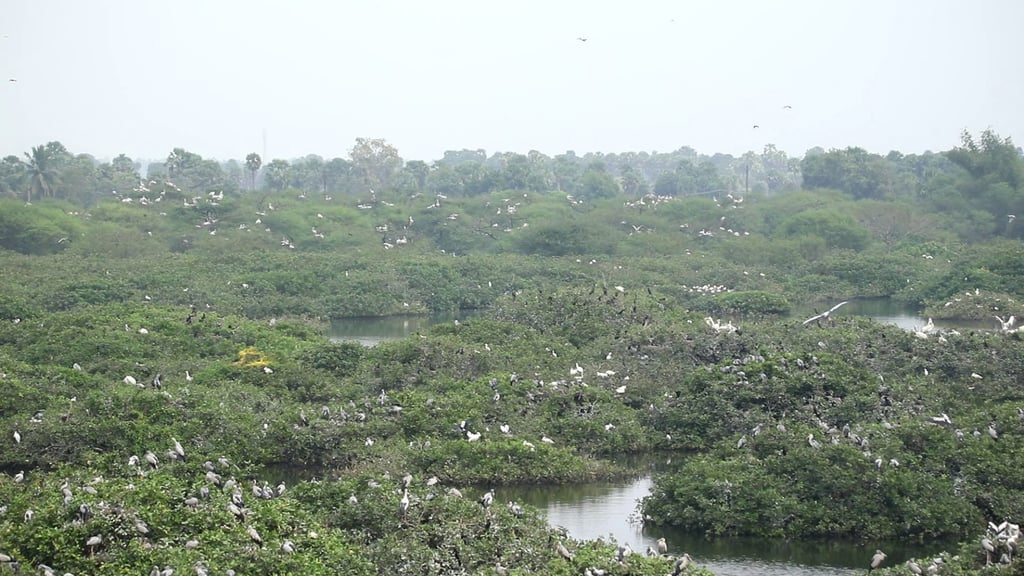
The sanctuary is a tourist hotspot and a popular destination for school trips and nature lovers. Species like the grey wagtail, blue-winged teal, sandpiper, pintail, garganey – many of which are native to the European continent – and a host of other local birds have been found there. So famous has the sanctuary become that songs in films often tell of its beauty and birds.
A study conducted by a group of activists last year found traces of four industrial solvents – dibromochloromethane, dichloromethane, tetrachloroethene and toluene, all of which are commonly used in pharmaceutical manufacturing – in the nearby soil and water bodies.