‘Far from out of the woods’: how a Covid-19 variant put Singapore back in defensive mode
- Life had returned to somewhat normal in the city state until the B.1.617 variant arrived on its shores and began spreading in the community
- With tens of thousands being tested, high-profile events and a travel bubble not going ahead this month, will it take a lockdown to stem the rise in infections?

Remain at home and leave the house only if it’s essential. Wear a good mask with high filtration capability. Get vaccinated when your turn comes.
A statement by the Health Ministry on Friday said the number of new community cases had more than doubled in the past week, while the number of unlinked infections had risen by more than four times. There are now 30 active infection clusters.
Between May 9 and May 20, out of the 250 locally transmitted infections logged in Singapore, at least 38 of them – or about 15 per cent of cases – have tested preliminary positive for B.1.617 and its sub-variants, according to figures made public by the Health Ministry.
Of these, 25 are part of Singapore’s 105-patient cluster from its airport terminals, two are associated with other smaller clusters, and 11 of them are unlinked, suggesting that there are hidden chains of transmission yet to be uncovered.
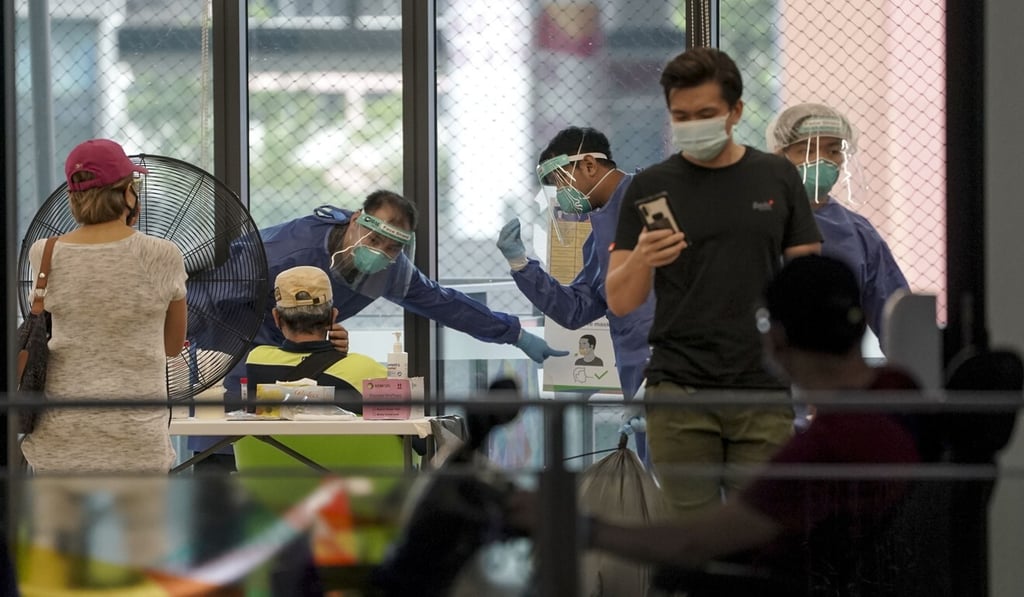
Tens of thousands of residents have been ordered to take Covid-19 tests, including all residents of two public housing blocks after several positive cases were found there.