Exclusive‘0 per cent’ chance: former French official who oversaw safety standards at Wuhan lab dismisses leak theory
- Biosecurity expert Gabriel Gras supervised the construction and accreditation of the Wuhan Institute of Virology’s BSL-4 laboratory in 2017
- He says he has ‘no doubt’ about the safety of the facility, despite growing scrutiny over the possible role of a lab accident in the origins of Covid-19

In his first interview with English-language media, Gabriel Gras, a virology researcher and biosecurity expert who was employed as a technical expert at the French embassy in China, said he did not believe SARS-CoV-2 originated or escaped from the WIV.
Gras said he had “no doubt” about the safety of the institute’s biosafety level 4 (BSL-4) laboratory, the first of that security specification to be built in China, after supervising its construction and accreditation by way of a collaboration between the French government and the Chinese Academy of Sciences.
While a lead WIV researcher has said the institute’s work on bat coronaviruses did not take place at the BSL-4 facility – which is required for the world’s deadliest pathogens – it has been pulled into debates about a “lab leak”.
According to US State Department memos obtained by The Washington Post last year, United States officials in 2018 noted a lack of trained staff at the then-new laboratory, raising questions about its operations.
Gras, who worked at the WIV between 2012 and 2017 – during which he says he gained insight into the institute’s staff and operations – said it would make little sense for researchers to use a BSL-4 facility to study a coronavirus due to cost and time considerations, as a BSL-3 laboratory was usually used. He also vouched for the institute’s standards and the professionalism of its researchers.
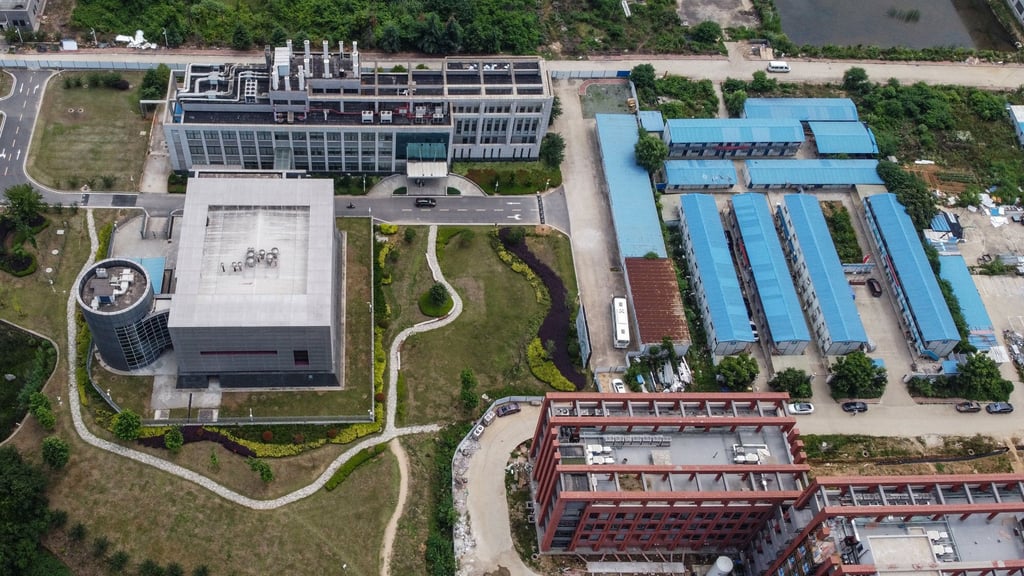
“I do not have any problem working in this [BSL-4] lab,” said Gras, who worked in the immunovirology division of the French Alternative Energies and Atomic Energy Commission before joining the foreign service. “I would not feel in danger. The lab is of a high standard. It was my daily work to verify this, and as I had the background of safety [consultant], lab designer, and virology scientist, I was 100 per cent involved.”