Land clearing for palm oil plantations jeopardises Indonesia’s climate commitments, harms rural communities: report
- Human Rights Watch points out that weak governance in the forestry and plantation sectors is putting at risk Jakarta’s pledges to reduce greenhouse gas emissions
- It also found palm oil expansion led to land conflicts, some of which involved the removal of land from villagers without replacement or adequate compensation

During a joint press briefing with Sharma, Environment and Forestry Minister Siti Nurbaya Bakar outlined a plan for Indonesia to be carbon neutral in the forestry sector by 2030. “This sector could even store over 140 million tons of carbon emissions,” she was quoted as saying by The Jakarta Post.
Esther Tamara, a foreign policy and climate analyst with the Foreign Policy Community of Indonesia – an independent, non-political body – said the target was “an ambitious plan that we all support, but we must take a realistic view of what’s happening on the ground”.
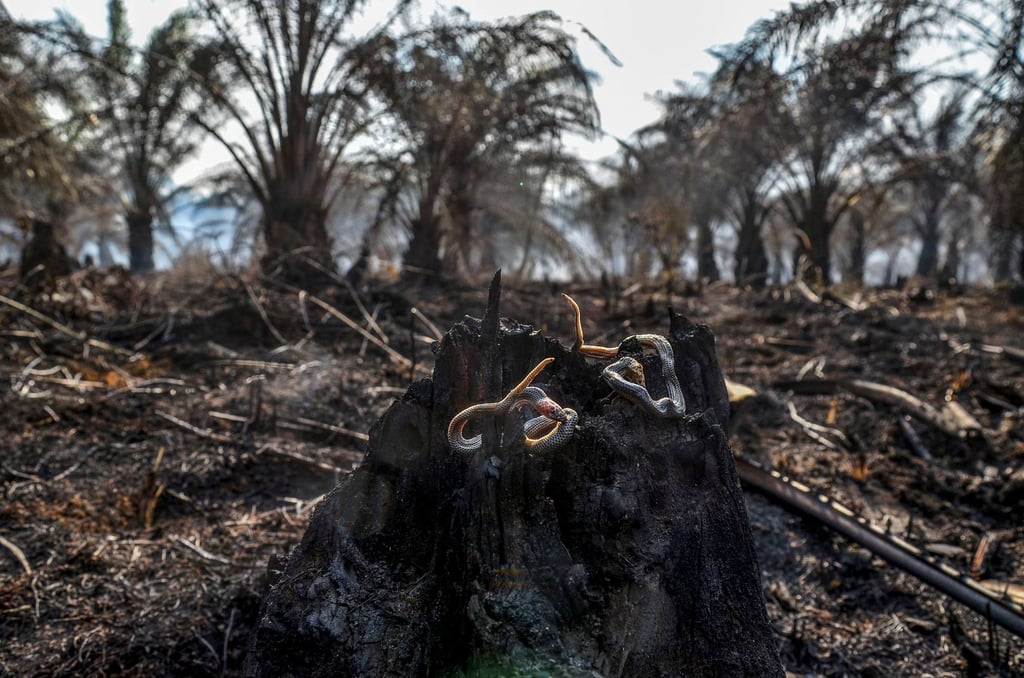
She said even though deforestation had hit a historic low last year, an area the size of Jakarta had been intentionally cleared since 2019 – and to reach the government’s target, a maximum of 4.82 million hectares of land could be deforested between 2010 and 2030.