As Indonesia wavers on deforestation pledge, young climate activists demand action
- Southeast Asia’s largest economy has long struggled between development and conservation, preferring ‘sustainable forest management’ to zero deforestation
- But younger, more vocal activists are demanding more action to fight climate change in the home of the world’s third largest tropical forest

Indonesia, which aims for net zero carbon emissions by 2060, has a turbulent history when it comes to protecting its forests, but recent comments from the environment and forestry minister, Siti Nurbaya Bakar, have still bewildered green activists.
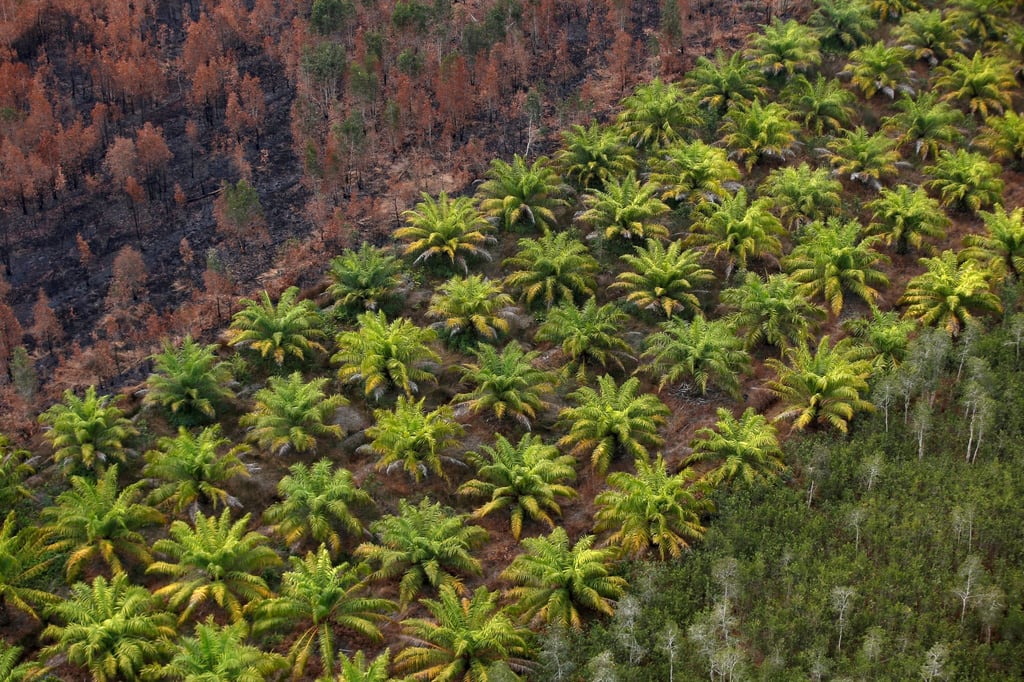
Indonesia, with the third-largest area of tropical forest in the world, had just days before endorsed a legally non-binding pledge during the COP26 climate conference to halt and reverse forest loss and degradation by 2030, alongside 136 other nations. These signatories account for nearly 91 per cent of global tree cover and 85 per cent of the world’s primary tropical forest.
Vice Foreign Minister Mahendra Siregar later told Reuters that the pledge did not contain the phrase “end deforestation” by 2030 and Indonesia had interpreted it as a vow to carry out sustainable forest management. Nevertheless, the outrage to Siti’s tweets came swiftly on social media, including from environmentalists and climate activists.
“We were stunned by her statements, which is quite funny since she is the minister of environment and forestry,” said Nadia Hadad, director of Jakarta-based environmental NGO The Sustainable Madani Foundation. “The development must go on but we can’t allow deforestation as we have a target to become a net carbon sink by 2030.”
According to Nadia, bureaucratic overlaps are one of the major impediments hampering efforts to save Indonesia’s forests, as companies are sometimes able to get permits to clear protected woodland and conservation areas by applying to different government bodies that do not share up-to-date forestry data.