Advertisement
Did Japan win public support for Fukushima water release with ‘nationalist victimisation’?
- Japan accuses China of ignoring the science behind the release plan, of attacking findings of the IAEA and of far more harmful releases from its own nuclear plants
- Critics of Japan’s discharge plan say Japanese media have helped the government convince the nation that it is safe to release the water
3-MIN READ3-MIN
15

Japan will reportedly start to release treated radioactive water from the Fukushima nuclear plant into the Pacific Ocean as soon as the end of August, a move that has barely elicited a ripple among the Japanese public.
Critics of the plan to discharge around 1.25 million tons of water from the plant, where three reactors suffered meltdowns after the March 2011 earthquake and tsunami, say the public has been swayed by an effective campaign by the Japanese government – assisted by the domestic media – to convince the nation that it is safe to release the water.
That effort to win over waverers at home has been abetted by what one analyst described as “nationalist victimisation”, with the Japanese government accusing China of ignoring what it insists is sound science behind the plan, of attacking the findings of the International Atomic Energy Agency (IAEA) and being guilty of far more egregious releases from its own nuclear plants.
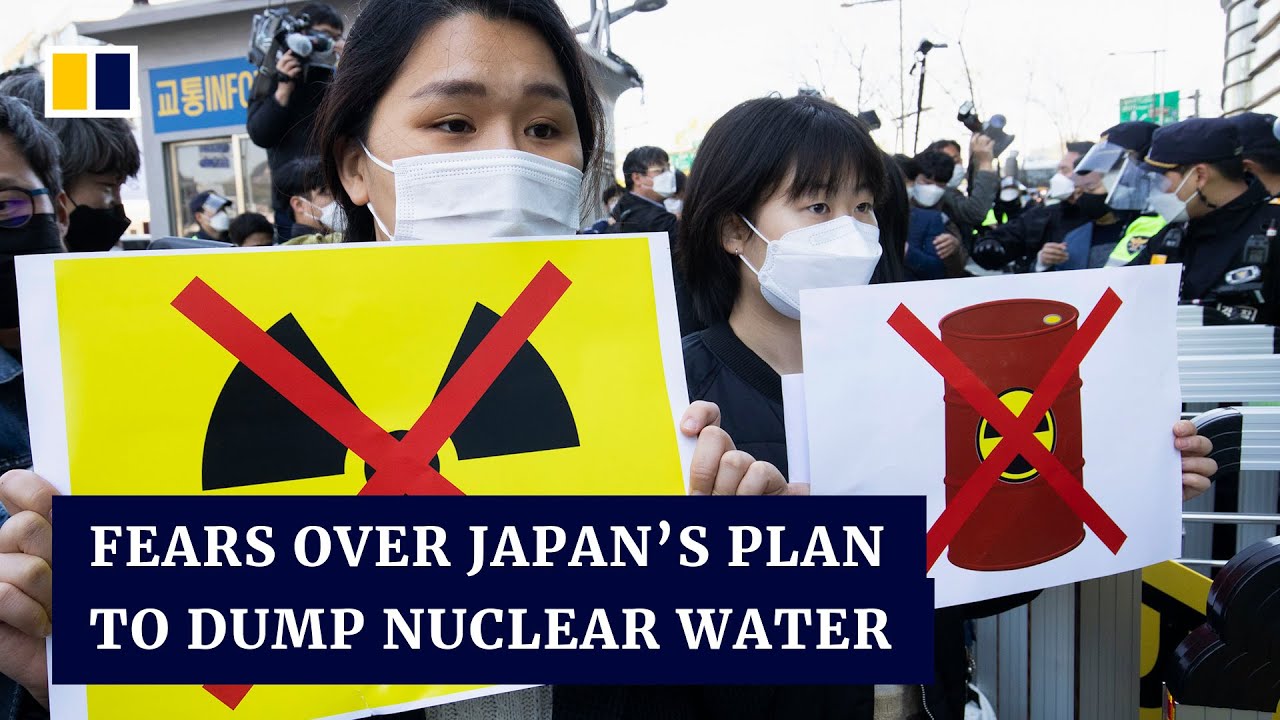
05:14
Why fears remain about Japan's plan to release treated Fukushima nuclear plant water into the sea
Why fears remain about Japan's plan to release treated Fukushima nuclear plant water into the sea
Conservative media have for some weeks been insisting that Beijing’s opposition to the release is purely for its political and geopolitical aims, a message that appears to be resonating with the public as bilateral tensions worsen over issues ranging from Taiwan to access to advanced technology and rare earth minerals.
Advertisement
More liberal media have recently joined in the accusations that China’s protests are motivated by political opportunism.
The Asahi newspaper reported on Monday that Prime Minister Fumio Kishida is likely to give Tokyo Electric Power Co (Tepco), the operator of the plant, final approval to start discharging the water after he returns from a three-way summit with US President Joe Biden and South Korean President Yoon Suk-yeol at the US leader’s retreat at Camp David, outside Washington DC, on August 18.
The Japanese government keeps repeating that the IAEA has declared it is completely safe to release the water. That is being repeated by the media and people are finally accepting it
“I really thought the release was going to be postponed, so this is very disappointing,” said Aileen Mioko-Smith, a campaigner with Kyoto-based Green Action Japan.
Advertisement
Advertisement
Select Voice
Select Speed
1.00x