Advertisement
Japan
This Week in AsiaHealth & Environment

Japan’s Fukushima cools on solar energy, pushing project providers to ‘give up’ to preserve environment

  • The Japanese city’s decision to stop more solar energy projects from being built is a reversal of its past efforts to lure developers
  • Residents say they’re concerned about the safety of such projects – and the deterioration that they cause to Fukushima’s natural landscape

Reading Time:3 minutes
Why you can trust SCMP
4
Solar power generation facilities are seen at the Fukushima hydrogen energy research field in the town of Namie. Photo: AFP
Julian Ryall
Japan’s Fukushima city will resist the construction of yet more solar energy projects in the hills surrounding the city, as a number of such facilities have damaged the local environment – in a sharp reversal from its efforts to attract solar developments after the 2011 disaster at the nuclear power plant some 60km to the southeast.

The city adopted a “no more mega solar” declaration on September 12 after a local government debate, although Mayor Hiroshi Kohata said he did not have the power to ban new projects outright.

The plan, he said, was to increase the requirements on solar firms and “encourage developers to give up in the early stages”.
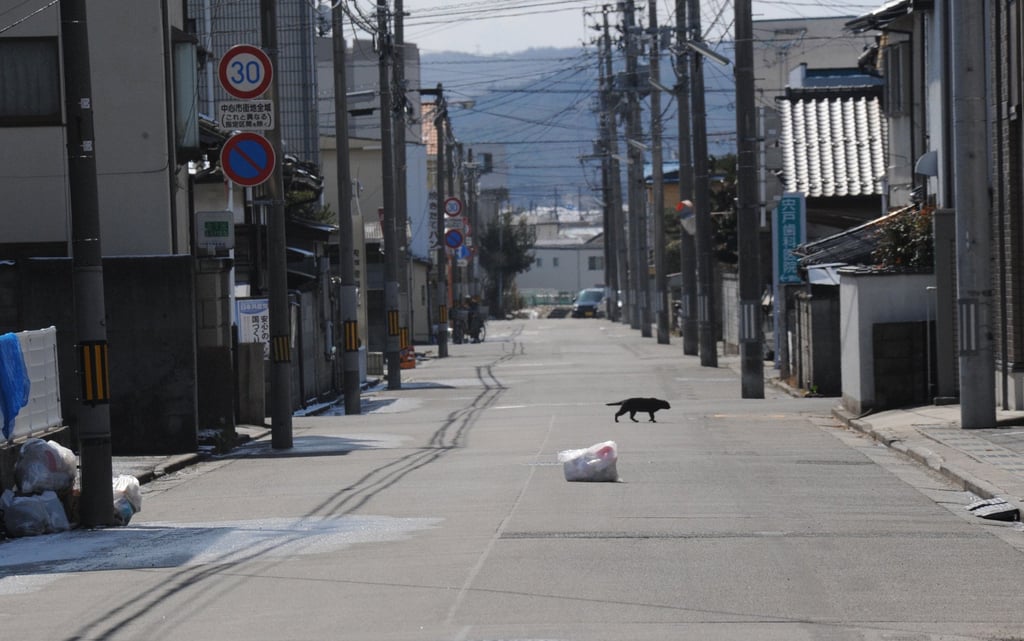
A deserted street is seen in Fukushima city in 2011, about 60km from the nuclear power plant that was badly damaged in that year’s earthquake and tsunami. Photo: Sinopix

In a statement, the city said it was seeking renewable energies that “coexist with the local community”.

Advertisement

“In recent years, large-scale solar power generation facilities promoted by business operators have been installed one after the other in mountainous areas and citizens have voiced concerns about deterioration of the landscape and declining local safety and security caused by deforestation,” it said.

“We must protect the safety and security of citizens’ lives and preserve the landscape of our hometown as a treasure for future generations.”

The city “no longer desires” the installation of solar generation facilities, it said. That is an about-face from its policy as recently as 2019, when operators were being actively courted to build in the prefecture. The switch to renewable energy sources was a direct consequence of the destruction of the Fukushima Daiichi nuclear power plant by 2011’s earthquake and tsunami.
Advertisement
Advertisement
Select Voice
Choose your listening speed
Get through articles 2x faster
1.25x
250 WPM
Slow
Average
Fast
1.25x