South Korea’s birth rate battles erode its military might: ‘still relatively large’
Investments in cutting-edge technology can only do so much to fill the void left by South Korea’s disappearing generation of soldiers

According to a Defence Ministry report released last Sunday, the South Korean military has shrunk by 20 per cent over the past six years, with active-duty personnel now numbering around 450,000 – down from about 690,000 soldiers in the early 2000s.
This is despite all able-bodied men being required to serve at least 18 months in the military between the ages of 18 and 28. Those in the navy serve for 20 months, while those in the air force serve for 21 months.
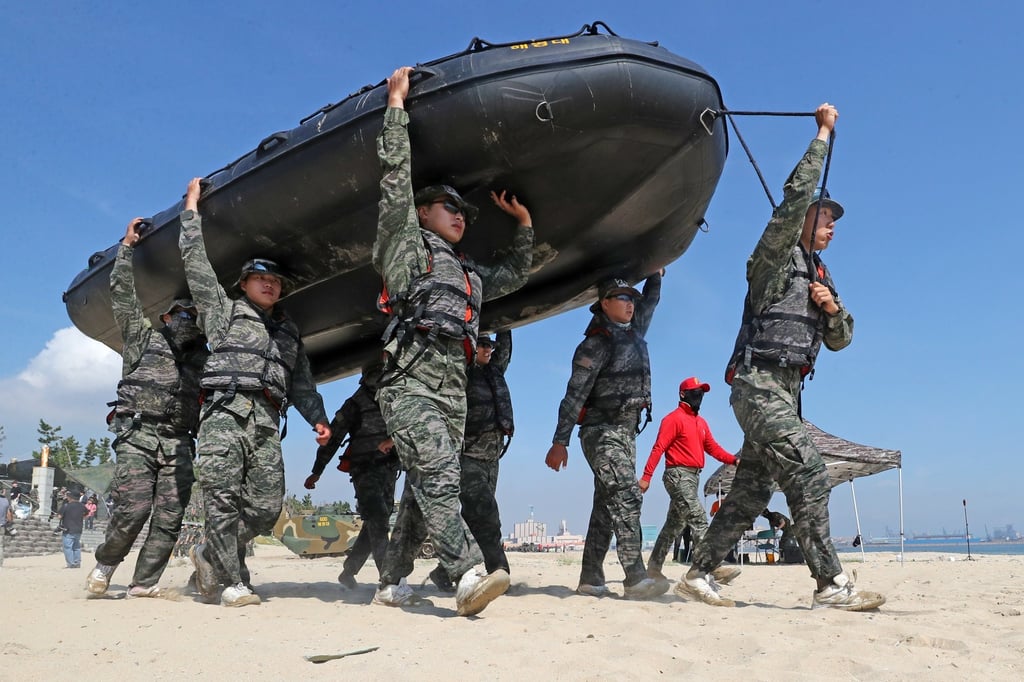
Though investments in advanced weaponry may compensate to a degree, this “has its limits”, as one analyst put it. The shortfall is already being felt on the ground. The Defence Ministry estimates that the military is 50,000 personnel below the threshold required for full operational readiness, with non-commissioned officer ranks particularly depleted.
The most pressing issue? A severe shortage of troops to patrol the demilitarised zone (DMZ) separating the two Koreas, according to Jin Hwal-min, an assistant professor of political science at Chonnam National University in Gwangju.