Japan struggles to weed out plant threatening agriculture, ecosystems
The seemingly innocuous alligator weed, or Alternanthera philoxeroides, poses a real problem, especially to rice farmers

But while the plant, whose scientific name is Alternanthera philoxeroides, may look innocuous, it is an absolute menace according to Koichi Goka, head of the Invasive Species Research Team at Japan’s National Institute for Environmental Studies (NIES).
“We first had reports of alligator weed in Japan in Hyogo prefecture in 1989 and it quickly spread from there across much of central and then southern Japan,” he told This Week in Asia. “We were soon having reports from the Tokai region as it spread to the east and now it is in Kanto and spreading to the north.”
The plant is now found in 30 of Japan’s 47 prefectures.
It was unfortunate that the plant liked the Japanese environment, Goka said, expressing concern over its effect on the agricultural sector.
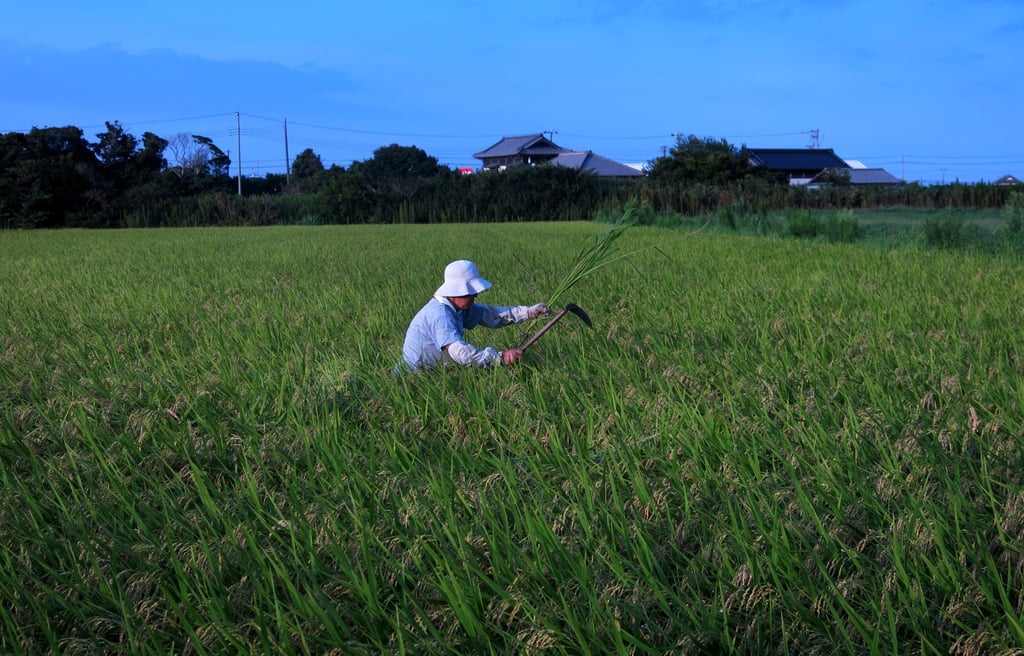
“It invades paddy fields, other agricultural fields and waterways and it spreads because it thrives both in a water environment and on the land,” he said. “It spreads very easily because it can reproduce from parts that are cut off the plant, such as a piece of leaf, so cutting the plant back can actually help it to spread.”