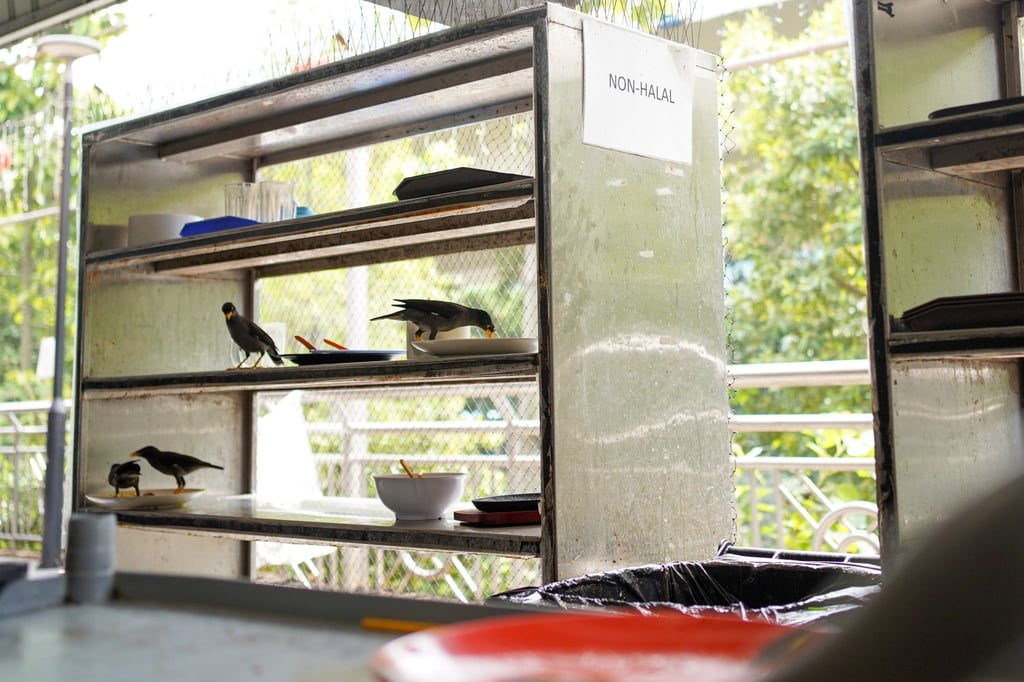
Singapore aims to be a ‘City in Nature’, but can residents and wildlife coexist in harmony?
Concerns about hygiene and attacks grow as wildlife becomes ubiquitous in Singapore’s urban landscape

“The birds like to pick up leftovers on tables and at the tray returning station, and even enter our stall sometimes. It’s concerning because we don’t know if they carry any viruses,” Nur’Ain said.
This concern is not hers alone. Singapore received more than 24,000 reports related to birds last year, most of which concerned bird feeding and sightings, the National Parks Board (NParks) told This Week in Asia.
Wildlife has become ubiquitous in Singapore’s urban landscape, but reported numbers suggest there is still a considerable way to go in achieving a harmonious coexistence between humans and animals.
About 11,800 wildlife-related reports were made last year, most of which were of sightings. Snakes, macaques and bats made up the bulk of these reports, according to NParks.
Urban birds have often made headlines as the cause of frustration due to bird droppings, attacks and hygiene concerns.