Going, going, gong: why is Lion dance dying in Singapore and Hong Kong, but roaring back to life in China?
- The lion dance has a storied history of more than 1,000 years and is a regular feature of Lunar New Year celebrations by the Chinese diaspora
- But troupes are struggling to attract young talent, due in part to tough training regimes and parents who prioritise education over arts and sport

With small, steady steps, Samuel Sim sauntered towards the stage in downtown Singapore, just as he had in his first lion dance competition two years ago. But unlike his previous attempts, in which he fell from the high poles multiple times, Sim was not prepared to fail.
Clad in the same fur-lined pants illuminated by hundreds of gold sequins, Sim thrust himself into the air as his partner, Ang Junming, tugged tightly at his waist. With each beat of the drum and sound of the gong, the 19-year-old performers executed their well-rehearsed hoists, drawing a roar of appreciation from the home crowd.
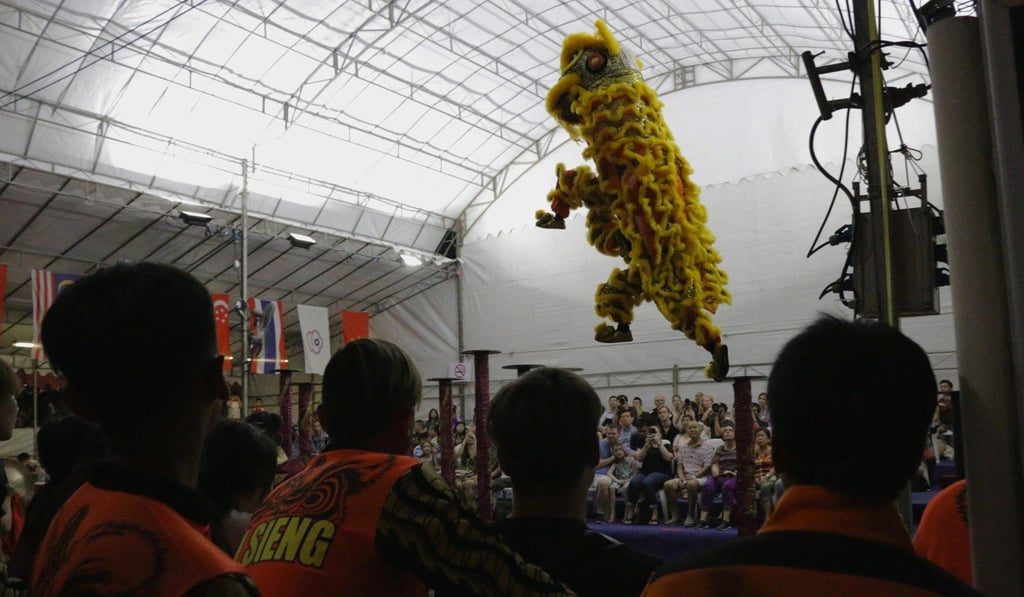
The young lion dancers were one of seven teams that took part in an annual international lion dance competition held at Kreta Ayer Square last month, in the city state’s bustling Chinatown.
Sim and Ang are part of an increasingly rare group of people in Singapore, where a growing lack of interest for the traditional Chinese performance, especially among young people, has led to a recruitment crisis.
The number of troupes had fallen from 323 in 2016 to 265 by late last year, according to the Singapore Wushu Dragon and Lion Dance Federation.
Sim, who trains at the Nam Sieng Dragon and Lion Dance Activity Centre, picked up lion dancing after watching a competition.