Statue politics: how India quietly removed colonists from their pedestals
- As statues of Edward Colston, Winston Churchill and M.K. Gandhi are targeted elsewhere, India pre-empted this by relocating colonial statues in the 1960s
- With these now in parks, PM Narendra Modi commissioned the Statue of Unity, honouring nationalist leader Sardar Patel, which is the world’s tallest

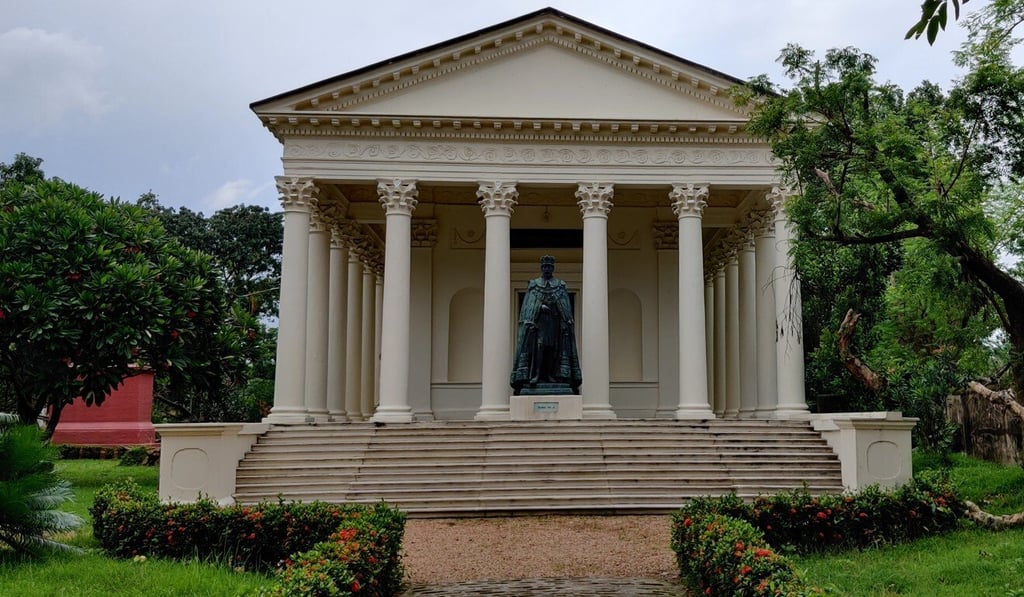
On the river banks in Barrackpore, a sweltering town some 30km from Kolkata, the statues of 13 dead British men stand high above the ground on brick-red plinths. One is made of marble and 12 are made of metal, but they all have the identical distant gaze – instantly recognisable to every Indian as the contempt with which government service officers treat them.
The move was taken by the first non-Congress government in Bengal, the state from which the British began their “raj” of Indian territory. It is unclear what the motivations were, as there had been no reports of attacks on colonial statues, unlike in other Indian cities in the mid-1960s.
“Perhaps Bengal and Bengalis had gained some sort of immunity from statuary as a form of colonial memorialisation because we have a far longer historical association with British rule,” said Dr Jayanta Sengupta, curator of the highly rated Victoria Memorial Hall in Kolkata.
“It is documented, for instance, that Bengalis are the first non-English-speaking people to learn English. And Bengalis monopolised clerical jobs all over British India. They gained from Empire.”