#JusticeforWaziran: killing of Pakistani woman after ‘watta satta’ marriage deal goes awry sparks anger
- The battered body of pregnant mum Waziran Chhachhar was found by a motorway, in an incident that sparked outrage on social media
- She was allegedly killed after her husband’s family turned their backs on a bride-exchange agreement involving two 12-year-olds

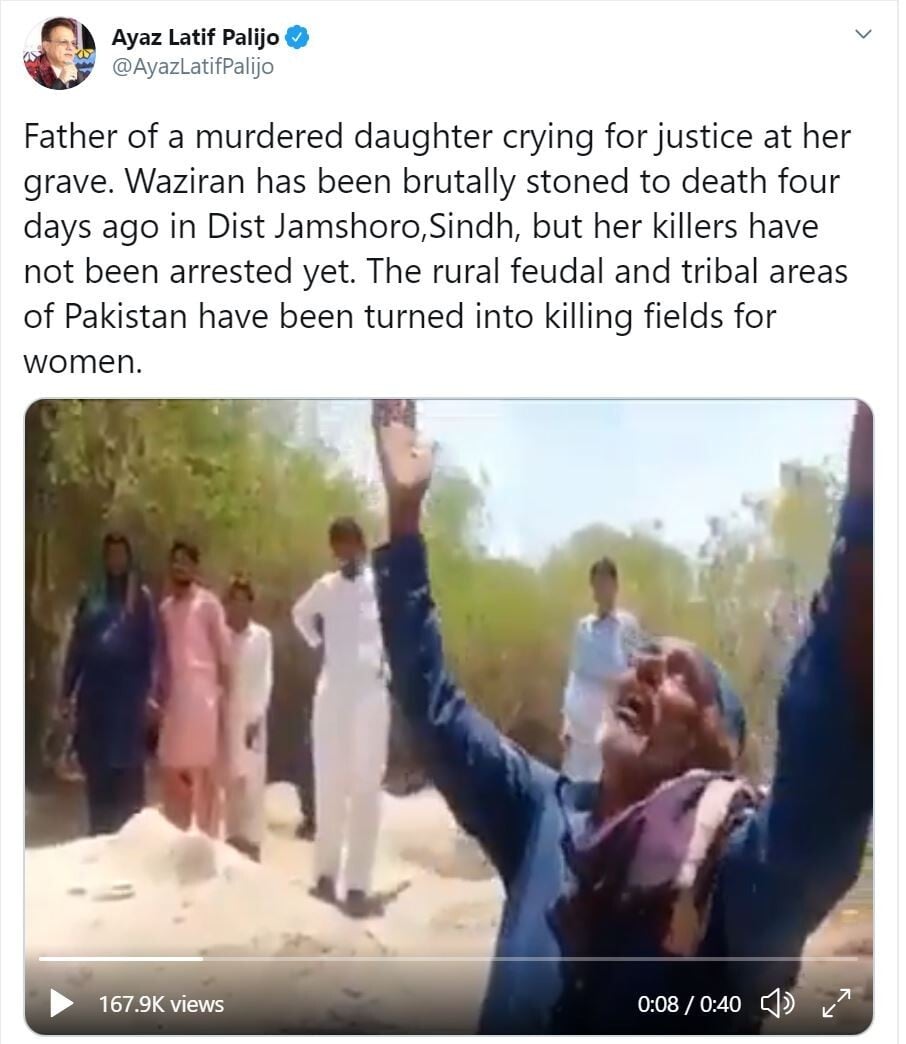
Waziran Chhachhar had been stoned to death, it is believed, after a bride bartering agreement involving her family and her husband’s family known as watta satta (give and take), reportedly went wrong.
Stories of the Pakistani woman’s death soon sparked outrage on the country’s social media, with many sharing a video of her father Gul Mohammad begging for the killers – thought to be members of her husband’s family – to be brought to justice. The hashtag #JusticeForWaziran trended on Twitter.
Watta satta involves paired marriages between members from two households. Most commonly, a brother and sister from one family are matched with a pair from another family. Occasionally, uncle-niece pairings or cousins may be matched with a pair from another household. Matches can involve children as young as 12 years old.
The tribal custom – which is based on a belief that a mutual exchange of daughters would secure a better marriage outcome for the girls – is commonly practised in Sindh, a province of about 47 million, and the southern part of Punjab, home to about 110 million people. As part of the tradition, families also exchange possessions, eliminating the burden of having to pay a dowry.
Manthar Ali, Waziran’s neighbour, said watta satta accounted for about 80 per cent of the 40 or so marriages that had taken place in his village over the past five years – mostly between families of farmers and stock-raisers.