Advertisement
Jumbo ‘jalebi’ to mark Narendra Modi’s birthday highlights India’s favourite celebratory snack
- The popular spiral-shaped crispy orange snack is not just for special occasions – some use it to treat ailments, and it has even inspired a hairstyle
- Jalebi came to India from Persia 500 years ago and the dessert is popular across South Asia, with some chefs even serving it as a savoury dish
3-MIN READ3-MIN
3

Pradeep Chamariain New Delhi
When Indian Prime Minister Narendra Modi celebrated his 71st birthday recently, several Hindu temples marked the occasion by preparing “jumbo” batches of jalebi – the famous crispy, crunchy and sweet Indian snack.
Their versions of the bright orange dessert were made to weigh 71kg and distributed to devotees to honour Modi.
But jalebi is not just a celebratory food for special occasions such as weddings and temple events. It is even considered a treatment for a range of ailments. Its spirals remind some of the human intestine and grandmothers have been known to advise youngsters to eat hot jalebi along with a glass of warm milk to cure anything from headaches to intestinal problems or skin diseases.
Advertisement
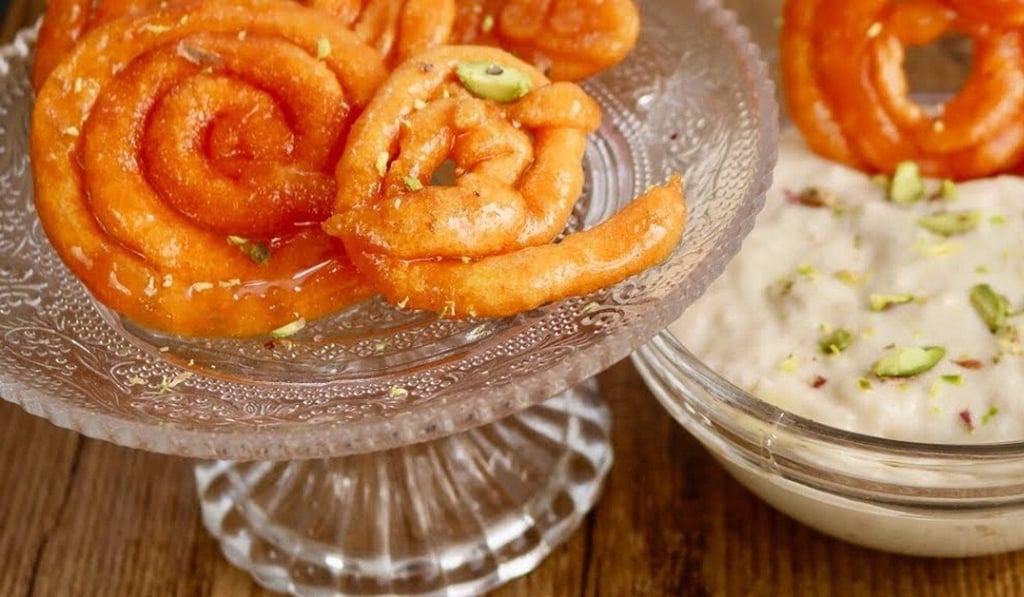
The popular snack came to India in the 15th century, brought by Persian traders from what is now Iran.
Advertisement
The name originated from the ancient Sanskrit word jalvallika, meaning full of water, or thick sugar syrup, said George Mathew, the food and beverage manager of the Holiday Inn Hotel in Gurugram, a global outsourcing hub near New Delhi.
Advertisement
Select Voice
Select Speed
1.00x