Can Singapore reach the World Cup? Here’s what it’s doing to nurture football stars
- The Unleash the Roar project is a national effort to lift local football by boosting children’s participation, the quality of coaching and intensity of training
- Coaches say there are also lessons to be drawn from Japan, an Asian football powerhouse which also has a strong focus on academics and players who are physically smaller-built
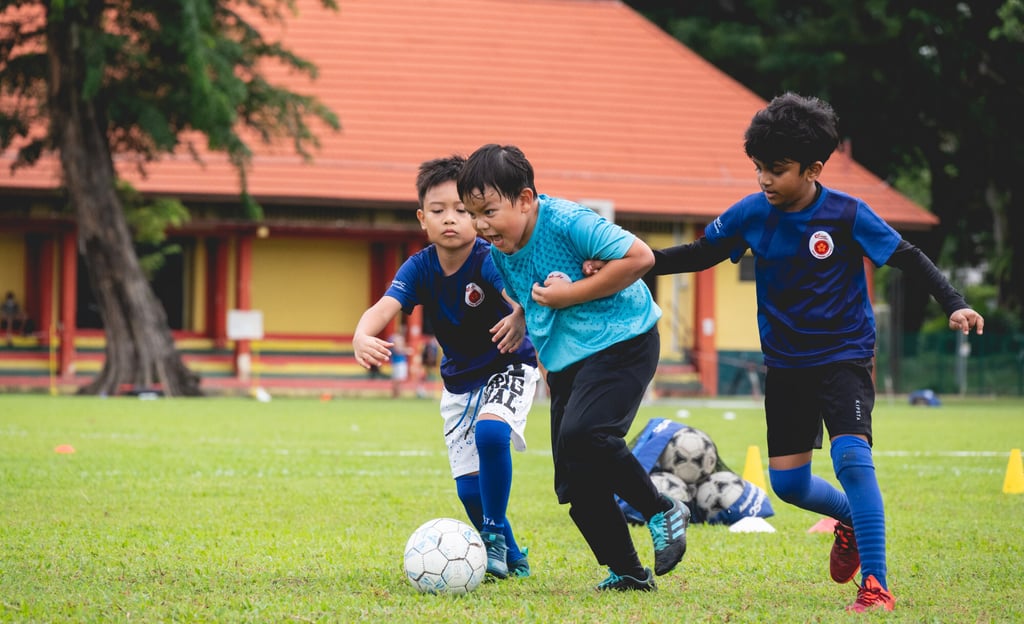
It is 8am on Sunday and about 40 boys and girls in blue jerseys and knee-high socks stand ready at the Farrer Park Field in central Singapore. For the next hour, these three- to eight-year-olds will work on football drills and compete against each other, under the instruction of coaches from the ActiveSG Football Academy.
The field is one of 14 training venues under the academy, which has seen a steady rise in the number of players over recent years.
The academy had about 400 players at five centres when it was first established in 2016 by ActiveSG – the national movement for sport by Sport Singapore – as a way to get more children involved in football. By 2019, there were about 8,000 players in 13 centres. Covid-19 restrictions have caused the numbers to drop to about 6,000.
Steven Tan, 51, who heads the Farrer Park centre, said the growth in participation was promising for Singapore football.
“The question is, 10 years from now, how many players will stay in the game?” the former national player asked.
This is what the Unleash the Roar project, a national effort to lift local football, aims to address. It was announced by Minister for Culture, Community and Youth Edwin Tong this year. In 2019, when Tong was vice-president of the Football Association of Singapore (FAS), he told The Straits Times it was a realistic goal for Singapore to qualify for the 2034 Fifa World Cup.
Headed by the FAS and SportSG, the programme aims to shake up the football scene with the help of the youth and education ministries.
If all the ideas materialise, Singapore will see much greater participation among children, better coaches in schools, a strengthened local youth league, and more opportunities for boys and girls to train in elite programmes and compete in top overseas leagues.