Once banned, Chinese lion dance now has broad appeal in Muslim-majority Indonesia
- Chinese lion dance groups sprang up across Indonesia after Suharto’s downfall in 1998, allowing people to express their ‘Chinese-ness’ again
- But a Chinese-majority troupe is uncommon in Indonesia today, as the activity has developed into a ‘competitive sport and form of entertainment’

It was past midnight in the Australian city of Melbourne. Citra Satria Ongkowijoyo, 35, was speaking to the younger members of Ksatria, an Indonesian-Chinese lion and dragon dance troupe he co-founded, as they unloaded their equipment at a mall 4,692km away from him in Surabaya.
Ksatria was there to take part in the 2022 Regional Chinese Lion and Dragon Dance tournament, organised by the Federation of Indonesian Lion Dance Sports (FOBI), held at the same shopping centre the next day, where 11 groups would battle it out to compete at the national level in October.
Ksatria is one of dozens of Chinese lion dance groups that sprang up across Indonesia after strongman Suharto’s downfall in 1998. Under the late dictator’s 32-year rule, public expressions of Chinese culture and identity were banned, including the art of lion dance, known locally as barongsai.
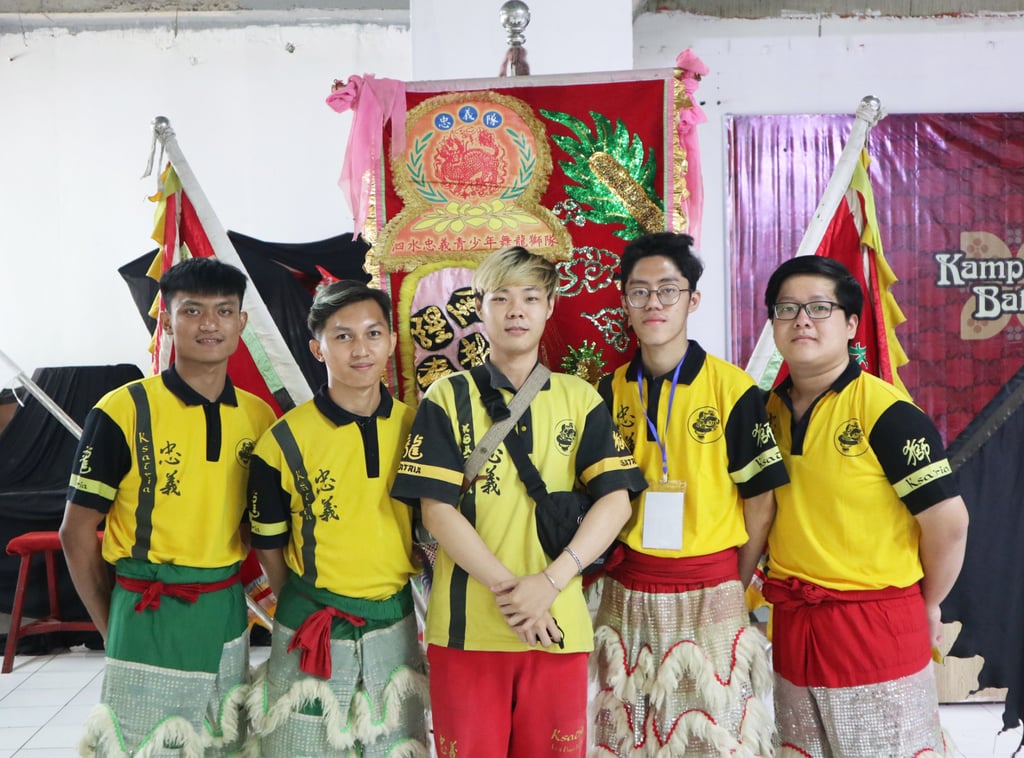
“If I still lived in Surabaya,” said Ongkowijoyo, an architect who moved to Australia in 2014 for his PhD programme and subsequently settled there. “I would be with the guys lugging our stuff into the venue.”
Ongkowijoyo, his brother and two friends founded Ksatria, now a troupe of 40 members, in 2004. The founders had met at a wushu academy that they attended.
“We are now on our third generation; the youngest of our members are mostly the under-26 Gen Z,” he said. “The co-founders and I have taken a back seat and mainly act in a supervisory role.”
Ongkowijoyo said the 2000s were significant for Indonesian-Chinese after the government allowed them to express their “Chinese-ness” once again.