Japan’s Niigata Prefecture declares war on ‘ferocious’ raccoons as critters destroy crops, buildings
- The prefecture hopes to prevent the 120 million yen (US$865,000) worth of damage to crops in 2020 in Hokkaido Prefecture
- Experts say it may be tough to stamp out these intelligent, highly adaptable creatures that also reproduce very quickly

Prefectural authorities in north Japan’s Niigata prefecture are stepping up efforts to eradicate raccoons because the critters destroy crops, damage buildings and infrastructure and endanger native species. Japan has labelled raccoons as an invasive alien species since 2005, and some 80 per cent of temples across the country have suffered damage at the paws of raccoons.
Niigata has seen a sharp increase in raccoon captures in recent years. The first raccoon was caught in 2010, followed by a second in 2014, but that figure rose to 10 in 2020, the last year for which the prefecture has provided statistics.
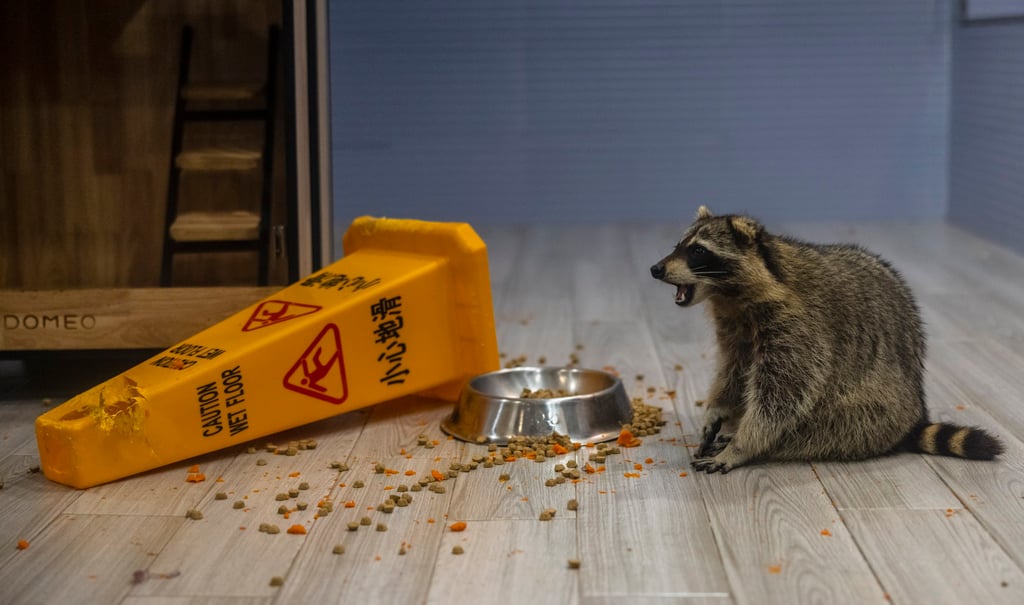
Niigata’s local authorities are conducting a survey across the prefecture to obtain an estimate of raccoons that are now residents of the prefecture and their preferred habitats. A control plan will then be drawn up with recommendations, as the prefecture attempts to prevent the 120 million yen (US$865,000) worth of crop damage in Hokkaido Prefecture in 2020 caused by raccoons.
Niigata prefecture has also issued a list of recommendations for anyone confronted by raccoons, instructing people not to approach them, to dispose of edible waste carefully and to spray routes frequented by the animals with vinegar or other repellent. Anyone who finds a raccoon living in their roof should use smoke to smoke them out or call in qualified pest exterminators.

03:26
In Japan, a real-life phoenix rises from the ashes of extinction
Kevin Short, a naturalist and professor of cultural anthropology at Tokyo University of Information Studies, agrees that something has to be done to reduce the trail of devastation that raccoons are leaving in their wake – although he believes eradication will be a tall order.
“These animals do not belong here and they are causing a lot of problems, but it’s really not their fault,” he told This Week In Asia.