Malaysia-Singapore causeway: after 100 years, ‘it’s mutual lah’
- It’s a symbol of close ties. It’s a lightning rod for tensions. But one thing’s for sure as the causeway reaches 100: it’s essential

For the past two decades, the 73-year-old has made the 30km commute from his home in western Singapore to his marine engineering consultancy office in Johor Bahru two to three times a week. He established a presence in the city across the border so he could secure local contracts as a Malaysian company after expanding beyond the island republic.
“I can go over any time straightaway,” said Pui, who usually sets off for work at 6am and returns home in time for dinner. “About 30 minutes and we are there already. Actually, faster than going to Shenton Way!”
More than 300,000 people like Pui use the Johor–Singapore Causeway every day, making it the busiest international border crossing in the world. The 1km-long embankment not only carries a continuous flow of commuters, day trippers and pupils in either direction, but also commodities and goods – and has done so for the past 100 years.
Officially opened on June 28, 1924 after almost five years of construction, the causeway was intended to ease pressure on the ferries and other vessels that were previously the only way of crossing the Johor Strait.
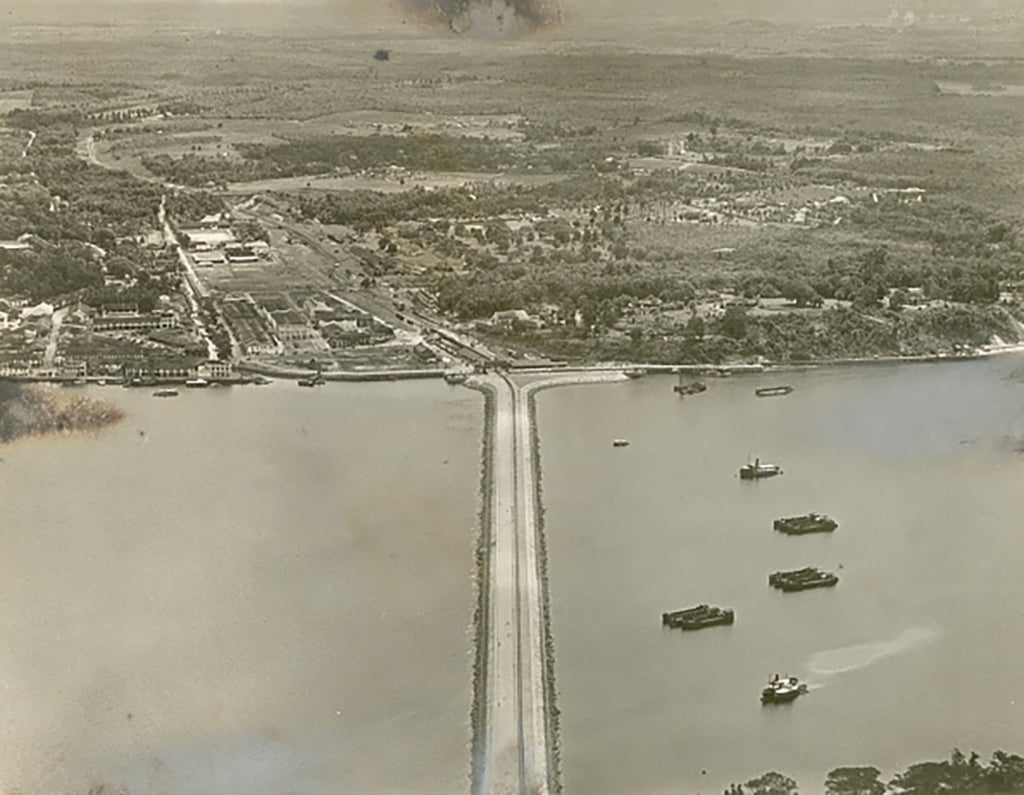
At the time, the land on both sides of the water was part of British Malaya – Singapore as a colony and Johor as one of the Unfederated Malay States – with a steady stream of rubber and tin heading south, while leisure excursions went in the other direction. At weekends especially, travellers would head north to Johor Bahru to try their luck at its so-called gambling farms, as betting was then illegal in Singapore.