Advertisement
Rare Rafflesia flower rediscovery in Indonesia revives push to drop colonial name
The giant flower find has renewed calls among researchers to rename its genus, which honours British colonial official Thomas Raffles
2-MIN READ2-MIN
1
Listen

A giant flower’s rediscovery in a West Sumatran forest of Indonesia has spurred a growing campaign among researchers to change the colonial-era name of one of the world’s most famous plants.
Last month’s find of an extremely rare Rafflesia hasseltii – one of the giant, foul-smelling blooms often dubbed “corpse flowers” – has energised researchers and activists seeking to strip the genus of its association with Thomas Stamford Raffles, a figure widely credited with founding colonial Singapore but criticised by scholars and campaigners for violence and coercion during Britain’s rule in parts of Southeast Asia.
Recognised as among the world’s largest flowers, the Rafflesia entered Western scientific records in 1818, when a local guide led British naturalist Joseph Arnold to the plant in what is now Bengkulu, on Sumatra’s west coast.
The genus was later named after Raffles, then the province’s lieutenant governor, while the species Rafflesia arnoldii honoured Arnold.
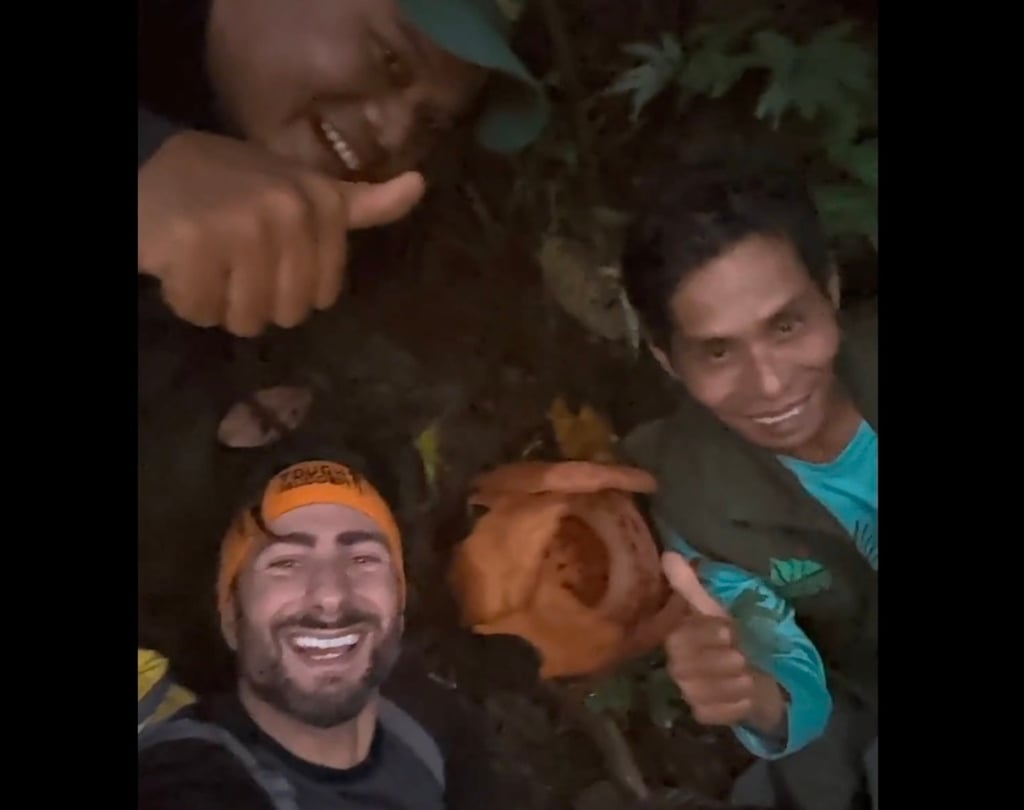
West Sumatra’s recently rediscovered Rafflesia hasseltii bears the name of Dutch botanist Arend Ludolf van Hasselt.
Advertisement
Select Voice
Select Speed
1.00x