Advertisement
Indonesia
This Week in AsiaLifestyle & Culture

At Indonesia’s sharia frontier, 21 lashes for a TikTok kiss ‘is our right’

Rights groups call it torture. Aceh’s residents reveal a more nuanced debate than outrage allows

4-MIN READ4-MIN
Listen
A man convicted of having sex outside marriage receives 100 lashes from a member of the sharia police during a public caning in Banda Aceh, Indonesia, on May 21. Photo: AFP
Aisyah Llewellyn
Footage of the punishment quickly went viral: an unmarried couple each receiving 21 lashes of the cane in Indonesia’s Aceh province after being accused of kissing in a car and live-streaming it on TikTok.

As each blow landed on their backs, the unnamed man, 22, and woman, 25, visibly grimaced. The woman later burst into tears, wailing in pain as the public punishment continued.

The caning was carried out on July 2 in Banda Aceh, the provincial capital. Aceh is the only Indonesian province to enforce sharia law under its Islamic Criminal Code, known locally as Qanun Jinayat.
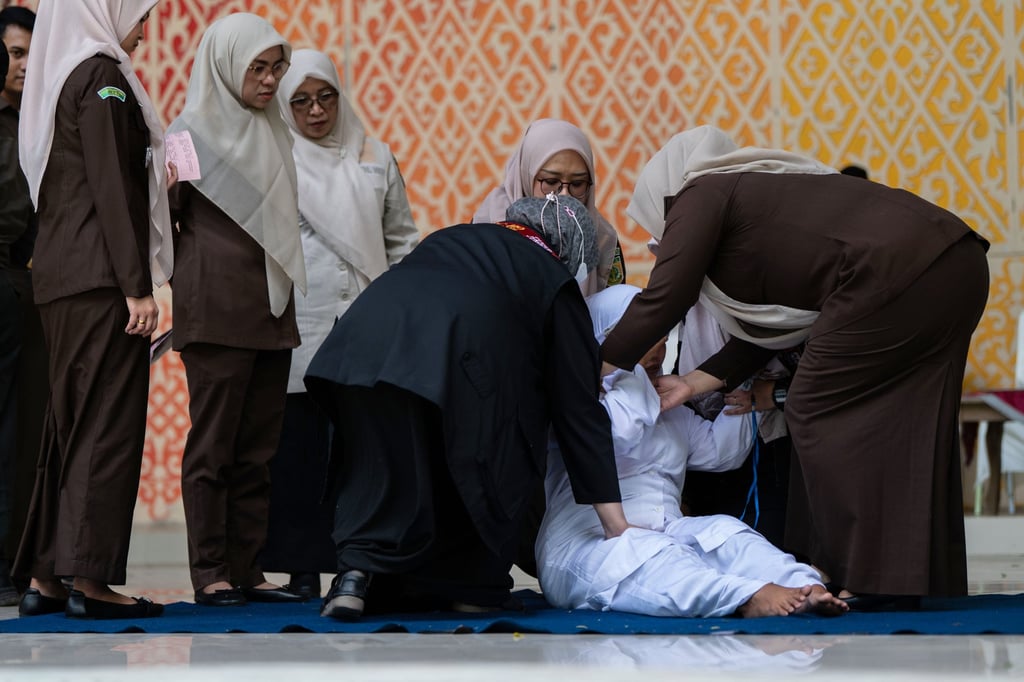
Officials help an unmarried woman get up after she was publicly caned for kissing during a TikTok livestream in Banda Aceh, Indonesia, on July 2. Photo: AP

It was far from the first such case to gain international attention and the response has become familiar: footage spreads online, rights groups condemn the punishment as inhumane and Aceh’s status as the Muslim-majority country’s sole sharia-enforcing province is thrust back into the spotlight.

But inside Aceh, caning is not viewed solely through a human rights lens. For some residents, it is bound up with religion, local autonomy and Acehnese identity.

Support is neither universal nor uncomplicated – even those who back the punishment often disagree over when and how it should be applied.

Aceh was historically one of the most powerful Islamic sultanates in Southeast Asia and for centuries observed informal Islamic law before it was formally codified in 2004. The law was enacted as part of a peace deal granting Aceh semi-autonomous status following a long and bloody civil conflict that left thousands of Acehnese dead in their struggle for independence from the rest of Indonesia.
Advertisement
Select Voice
Select Speed
1.00x