Back To The FutureThe plight of Chinese Indonesians: distrusted in Jakarta, forgotten in China
The drama surrounding ethnic minority governor Basuki Tjahaja Purnama has reawoken anti-Chinese sentiments that stretch as far back as the building of modern Jakarta
In a year marked by high-stakes elections and divisive candidates, Indonesia has a contribution to make – the race for the governorship of Jakarta and blunt-speaking candidate Basuki Tjahaja Purnama.
The gubernatorial election is considered the second most important in the world’s largest Muslim democracy and a springboard to the presidency. This year is particularly interesting because of the controversy surrounding the leading candidate – the incumbent Basuki, more commonly known by his Hakka Chinese name, Ahok.
Chinese Christian governor Basuki Tjahaja Purnama, right, and his running mate Djarot Saiful Hidayat, at a campaign rally in Jakarta. Photo: AFP
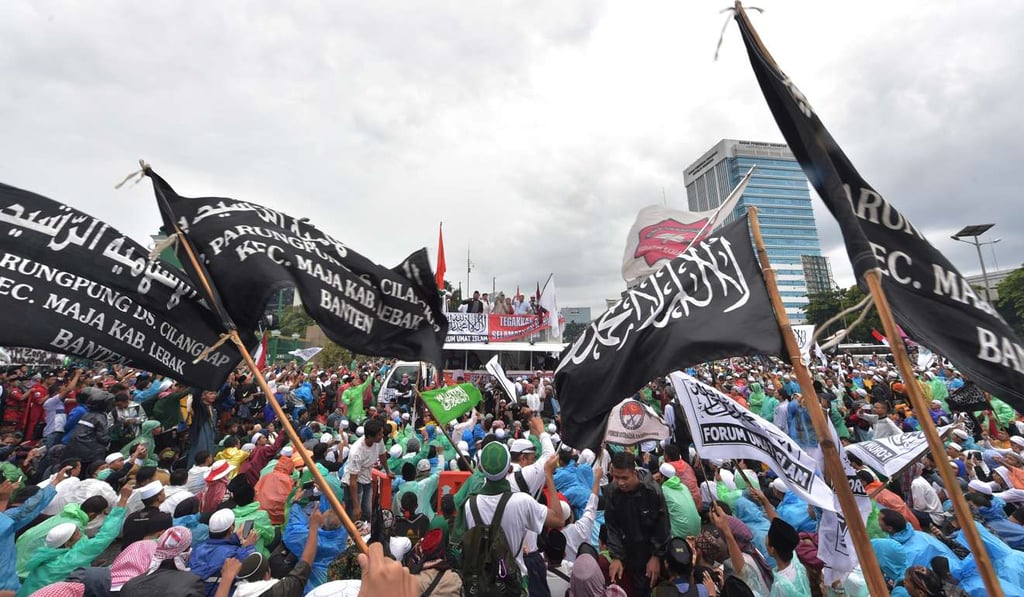
A Christian and an ethnic Chinese minority, Basuki is accused of blasphemy regarding a campaign speech in September in which he suggested voters were being misled by those who cited the Koran as saying they should not vote for non-Muslims. He is now facing a trial that could lead to a lengthy jail term. The incident also triggered some of the largest protests Jakarta has seen in recent years.
Still, Basuki and his deputy scored the most votes (42.9 per cent) in the first round of the 2017 election last week. But as no side managed to get 50 per cent of the votes, the election will now go to a second round.
Advertisement
Jakarta’s Christian governor Basuki Tjahaja Purnama casts his ballot in the first round of voting in the gubernatorial election. Photo: AFP
The campaign against Basuki is complicated. His ethnicity is not the most important factor. Nonetheless, the drama did trigger anti-Chinese sentiments in Indonesia. With a long history of persecution, the Chinese community is duly worried. Hate speech towards ethnic Chinese has surged recently, with fake news being circulated about local Chinese colluding with Beijing, harbouring evil plans. The most far-fetched stories included a Chinese plan to invade Indonesia and Beijing using “biological weapons” (contaminated chilli seeds) to destroy the Indonesian economy.
Ironically, most people in China are blissfully oblivious to the news, which receives little coverage in the mainland media. When asked, a mainland editor shrugged. “No, there is no order to censor it. People just don’t care and they are not interested.”
Advertisement
Indonesian Muslims demonstrate against Jakarta governor Basuki Tjahaja Purnama, outside parliament. Photo: AFP
This is perhaps a reflection of the plight faced by many Chinese Indonesians. Even though their forefathers were among the first settlers of the archipelago and built the modern city of Jakarta, Chinese Indonesians have always been eyed with suspicion by the local population. Yet, back in China, they are seldom remembered. To appreciate their situation, it’s worth remembering how Jakarta came into being.