
AbacusHold those fears of an Asian crisis. US$3 trillion time bomb looks like a slow burner
Trouble will soon blow over if the current spike in the US dollar proves short-lived. Happily, there are good reasons to believe that it will

Two weeks ago this column warned that “Asia should prepare for squalls”. With the US dollar appreciating at the same time as the price of oil was going up, some of the region’s more fragile economies, including Indonesia, Malaysia and India, could soon face formidable financial headwinds.
Since then, things have only got worse. The US dollar has continued to appreciate, climbing another 2 per cent against a widely followed reference basket of major currencies. And the price of Brent blend crude oil has made further gains, touching US$80 a barrel on the collapse of production in Venezuela and the prospect of renewed US economic sanctions against Iran.
Oil’s up, dollar’s up, interest rates are up. Asia’s heading down?
So far the impact has been felt most brutally beyond East Asia, in countries that rely most heavily on short-term US dollar financing. Argentina is in emergency talks to secure a bailout from the International Monetary Fund. And in Turkey, the local currency has now fallen 20 per cent against the US dollar this year, with President Recep Tayyip Erdogan fulminating against a foreign plot to unseat him, and his political allies condemning “dollar terrorism”.
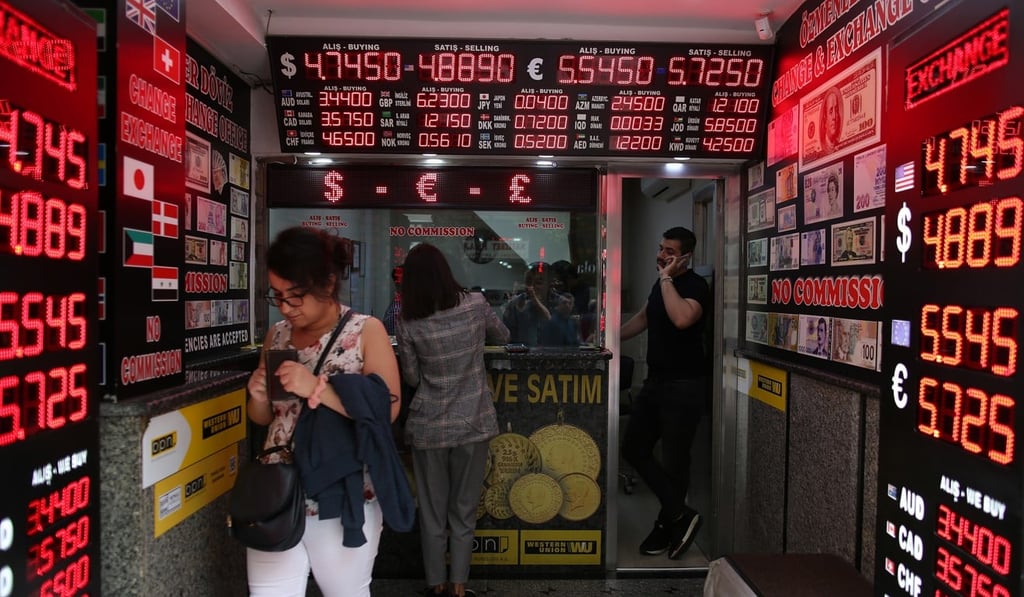
These effects may be largely local and as yet isolated. But that hasn’t stopped noted economic luminaries sounding the alarm, cautioning that more widespread trouble may be on the way. Last week, Nobel-winner Paul Krugman warned of “a classic 1997-98 style self-reinforcing crisis”. A few days earlier, respected Cuban-American economist Carmen Reinhart had warned that emerging market economies are a lot more vulnerable now than they were either during the 2013 “taper tantrum” mini-crisis, or during the 2008 global financial meltdown.
What’s got these economic bigwigs so wound up is the sheer amount of US dollars that companies in the developing world have borrowed over the last few years. With the US Federal Reserve busy printing money in the years following the 2008 financial crisis, and with the US dollar weak until mid-2014, US loans were cheap and easy to repay. By 2015, according to the Bank for International Settlements, the most credible of all the world’s multilateral financial institutions, corporations in emerging markets had accumulated some US$3.3 trillion in US dollar debt.