
Asian AngleDependent visa case gives Hong Kong’s gay community reason to hope
The future’s looking bright in the fight against discrimination – a victory in the city’s top court by a lesbian couple who took on the Immigration Department will have far-reaching implications

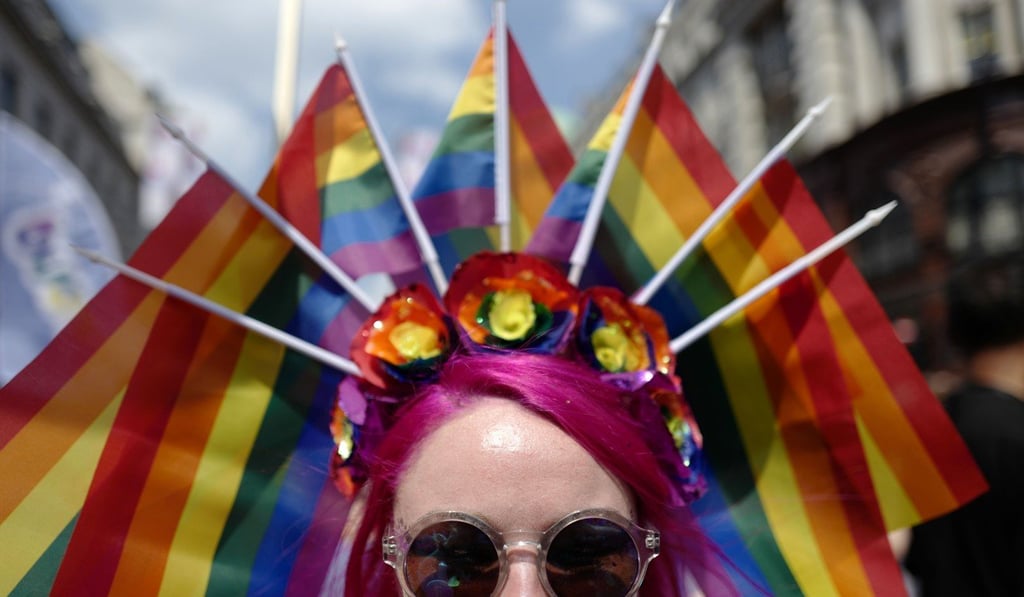
The Pride March in London this year was a particularly colourful and vibrant celebration of diversity. There were 30,000 participants, including 150 police officers. A million spectators were estimated to have lined the streets. Shops and billboards championed the event, which underlined the importance of tolerance, inclusiveness and equality.
In the same week, in July, Hong Kong’s top court ruled on the latest attempt by the city’s government to uphold discriminatory policies against gay couples. In a strong judgment, the court held that the Immigration Department’s refusal to grant dependency visas to same-sex couples was unlawful.
The significance of the Court of Final Appeal judgment lies not only in the victory for a lesbian, referred to as QT, but in the reasoning used by the five judges to reach that unanimous decision.
Their findings will make it more difficult for the government to pursue discriminatory policies in future. The ruling is likely to have an impact which goes far beyond the visa issue in question.
Then it emerged that a woman had launched an unprecedented court challenge to the government’s refusal to allow her to enter into a civil partnership with her female partner. The woman, known as Mk, filed the case in June, arguing that the government’s failure to recognise civil partnerships for same-sex couples breaches privacy and equality rights protected by the city’s de facto constitution, the Basic Law.