
-
Advertisement
US-China trade war
This Week in AsiaOpinion
Tom Holland

Abacus | Trump’s trade war is not behind China’s stock market slump

  • Markets in the US and China have been primarily propelled by domestic drivers. Likewise, the fall in China’s shares stems from Beijing’s campaign to crack down on the shadow financial system

Reading Time:4 minutes
Why you can trust SCMP
Since the beginning of October the benchmark US S&P 500 index has slumped 7.5 per cent, roughly in line with the fall over the same period in the Chinese stock market. Photo: Bloomberg
Steep falls in global stock markets over the past few weeks have raised fears that escalating international trade conflict could trigger an October crash reminiscent of those in 1929, 1987 and 2008, when the United States’ equity market plunged by 25 per cent in a matter of days. But while the risk of an even steeper sell-off cannot be dismissed entirely, the US-China trade war will not be to blame.
All through this summer, American investors and businesspeople were confident the US would emerge the victor in its trade war with China. As evidence their optimism was justified, many pointed to the relative performance of the US and Chinese stock markets. In the six months or so after US President Donald Trump first ordered officials to impose import tariffs on goods from China, US stock prices rose by 10 per cent.

Over the same period, the broad Chinese market fell 15 per cent. And the Shenzhen A-share market, which better represents the sort of private-sector exporters and technology companies likely to be most affected by US tariffs, slumped 20 per cent.

Advertisement

This marked divergence, argued many American investors, reflected the relative strength of the US economy, and the fragility of Chinese corporate earnings and growth in the face of US tariffs.

Over the last month, their confidence has taken a severe knock. Since the beginning of October the benchmark US S&P 500 index has slumped by 7.5 per cent, roughly in line with the fall over the same period in the Chinese stock market. This suggests investors may be beginning to conclude that the US economy is also vulnerable to trade-war escalation.
Advertisement
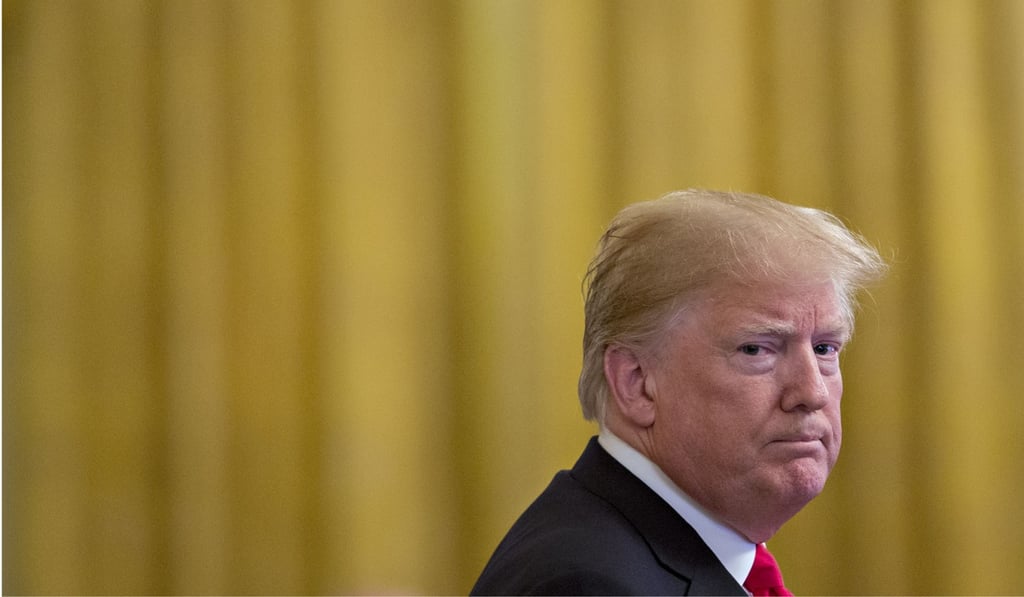
In the six months or so after US president Donald Trump first ordered officials to impose import tariffs on goods from China, US stock prices rose by 10 per cent. Photo: Bloomberg
Advertisement
Select Voice
Select Speed
1.00x