Advertisement
What Bangladesh PM Hasina’s victory means for the India-China power play in South Asia
- The Awami League party led by Bangladesh Prime Minister Sheikh Hasina predictably won the national election by a huge majority, but now she must get on with the job of balancing the strategic interests of neighbouring giants
3-MIN READ3-MIN

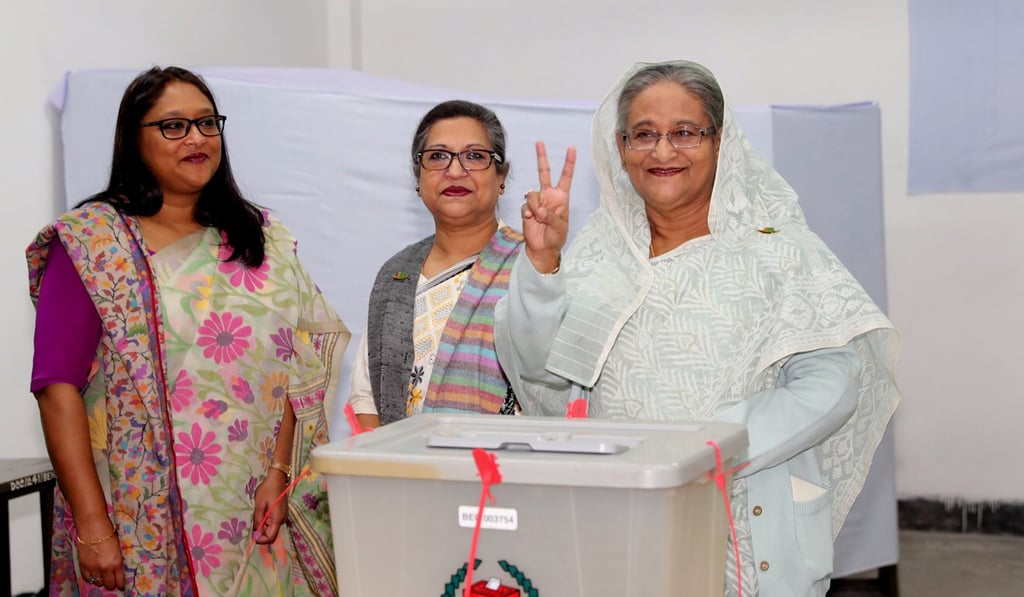
The Awami League party led by Bangladesh Prime Minister Sheikh Hasina predictably won the national election held on Sunday, giving the incumbent leader a record fourth term – and her third consecutive victory.
The AL, which has governed Bangladesh for the last 10 years and had formed a coalition known as the “grand alliance”, won 288 of the 300 seats, handing Hasina a definitive majority. But the win came with election day violence, which caused the deaths of 17 people, and brought allegations of booth rigging.
The opposition coalition, called Jatiyo Oikyo Front, with the main opposition party Bangladesh National Party (BNP), has rejected the election outcome and called for another vote.
Advertisement
Domestically, politics in Bangladesh has been characterised by intense bitterness and personal rivalry between the two major players – Hasina and former prime minister Khaleda Zia, now in jail on corruption charges. Internationally, the country is caught between two equally daunting giants, each with their own strategic agendas.
Advertisement
Casting allegations and aspersions have been a central feature of Bangladesh politics over the last four decades. This latest victory may be challenged, but it is unlikely that there will be any significant change to the outcome of the polls. It is also evident that Prime Minister Hasina and her team will steer Bangladesh for another five years, and consolidate the substantive socio-economic progress it has made over the last decade.
Advertisement
Select Voice
Select Speed
1.00x