Advertisement

Opinion | How rage and love gripped India after the Kashmir terror attack

  • For days after the February 14 suicide bombing that killed 44 Indian soldiers, political leaders did nothing to calm public furore aimed at Kashmiri people. In fact, they spurred it along, says Harsh Mander

Reading Time:4 minutes
Why you can trust SCMP
Indian demonstrators hold placards as they form a human chain during an anti-war demonstration called by pacifist organisations in New Delhi on March 4. Photo: AFP
A young suicide bomber carrying 350kg of explosives rammed his car into an armed convoy on February 14 in Kashmir, killing 44 Indian paramilitary soldiers. The attack spurred a surge of collective grief in India, as people across the political and social spectrum came together to mourn the loss of the soldiers killed in the line of duty – mostly sons of farmers and workers in their twenties.

But the grief lasted only too briefly, with the sorrow quickly transmuting into a menacing frenzy of rage, hate and fear, further cleaving an already bitterly divided India.
As televised state funerals were held in the villages of each of the slain soldiers, emotions swelled and rage focused on four specific targets: Kashmiri students and workers; Pakistan – spurred on by calls for war by television studios, newspapers and across social media; people who called for peace or questioned the government’s security record and who were demonised by the ruling establishment and on social media as anti-national traitors; and India’s Muslim citizens, as people questioned their patriotism and loyalties to Pakistan.
Advertisement
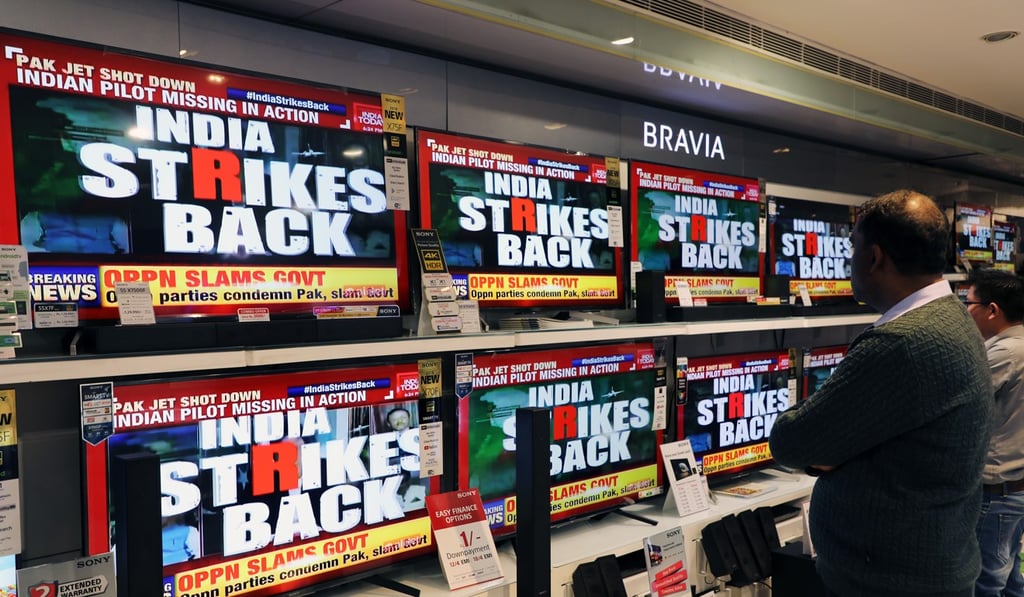
A man watches a television news report on the confrontation between Indian and Pakistani fighter jets in New Delhi. Photo: Bloomberg

Newspapers reported large-scale evictions of Kashmiri students, and sometimes faculty, from colleges, hostels and even rental houses in many parts of the country. Colleges announced they would not admit any new Kashmiri students in future. Workers, shawl and dry fruit traders were threatened and attacked.

Advertisement

Little of this was spontaneous. It was the student wing of the ruling Bharatiya Janata Party (BJP), the Akhil Bhartiya Vidyarthi Parishad, and non-state Hindu supremacist organisations like the Bajrang Dal and RSS with BJP workers, who led the attacks and threats against Kashmiri students, teachers, traders and workers.

Advertisement
Select Voice
Choose your listening speed
Get through articles 2x faster
1.25x
250 WPM
Slow
Average
Fast
1.25x