OpinionMahathir’s belt and road balancing act confirms Malaysia’s ‘middle power’ ambitions
- Some observers suggest Malaysia has plenty of room to move in negotiations with China. In reality, it finds itself in a tight spot with limited options
- Malaysia is not in a position to deliver the project on its own and is therefore inclined to stick with China, its largest trading partner

The cost has been cut by more than one-third to about US$10.68 billion from the previous US$16 billion, with about US$5.3 billion paid in advance. Malaysia will contribute more raw materials and labour – up to 70 per cent, with the remaining 30 per cent coming from China and other Asian countries.
I’d side with rich China over fickle US, Mahathir says
While Malaysia’s economic concerns shape its response China’s belt and road strategy, cooperation complements its geopolitical ambitions as a “middle power”. Malaysia has therefore become a successful case study for the ongoing implementation of belt and road projects.
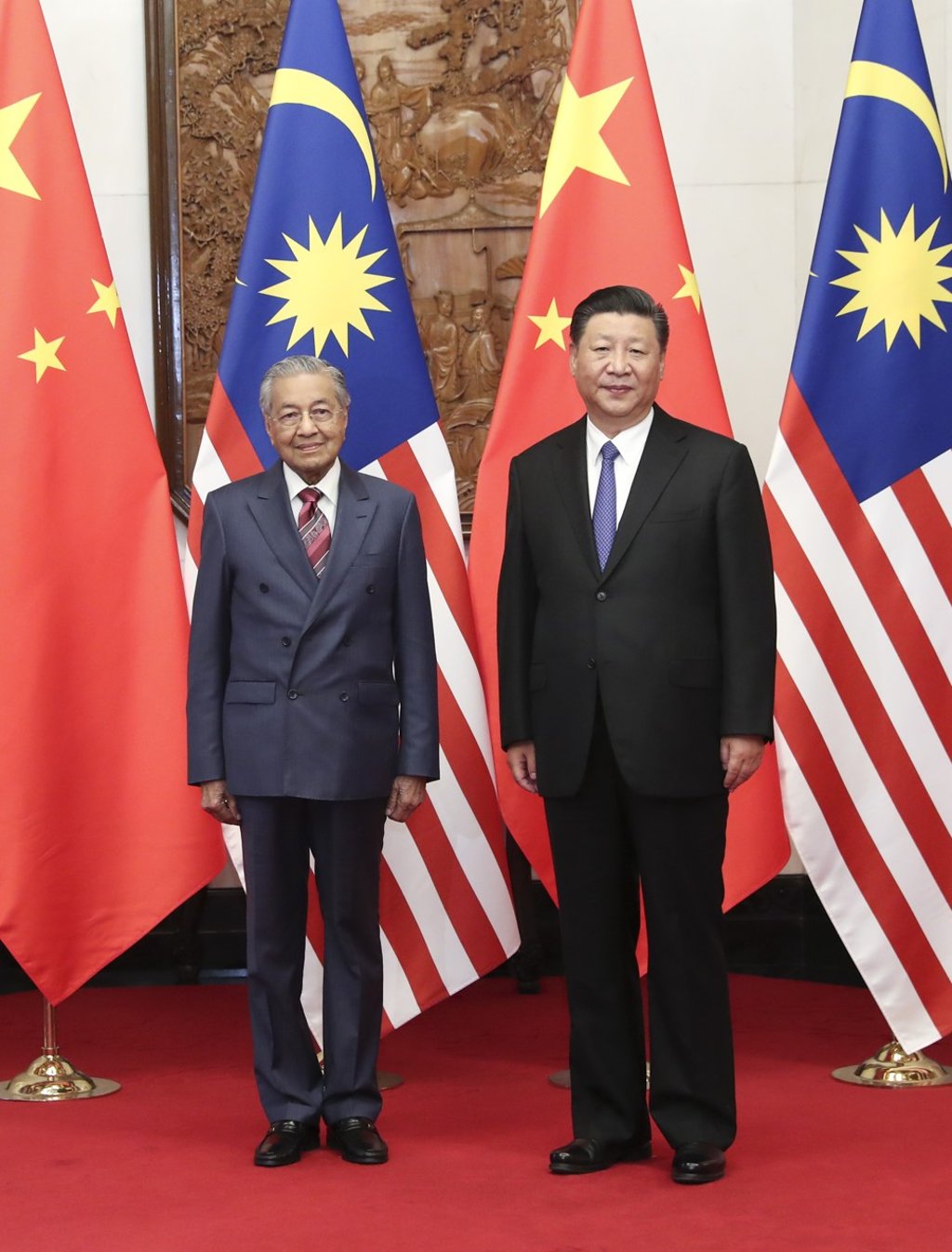
It no doubt helped that Mahathir was able to present his concerns in the most non-confrontational manner possible, emphasising domestic concerns rather than any particular anti-Beijing sentiment.
When Mahathir visited the Philippines in March, he urged President Rodrigo Duterte to avoid such debt traps and also warned of a “foreign influx”, referring to some 200,000 Chinese working in the country.